
The After-Hours RFQ Workbook: What to Send at 2 a.m. So the Quote Comes Back Usable
Two tables to copy tonight. Fifteen fields that let a supplier answer once without a round trip, and a sheet that turns three quotes with different lead times, freight and return terms into one comparable column.
Working on a live operating problem? Book Your 20-Minute Assessment
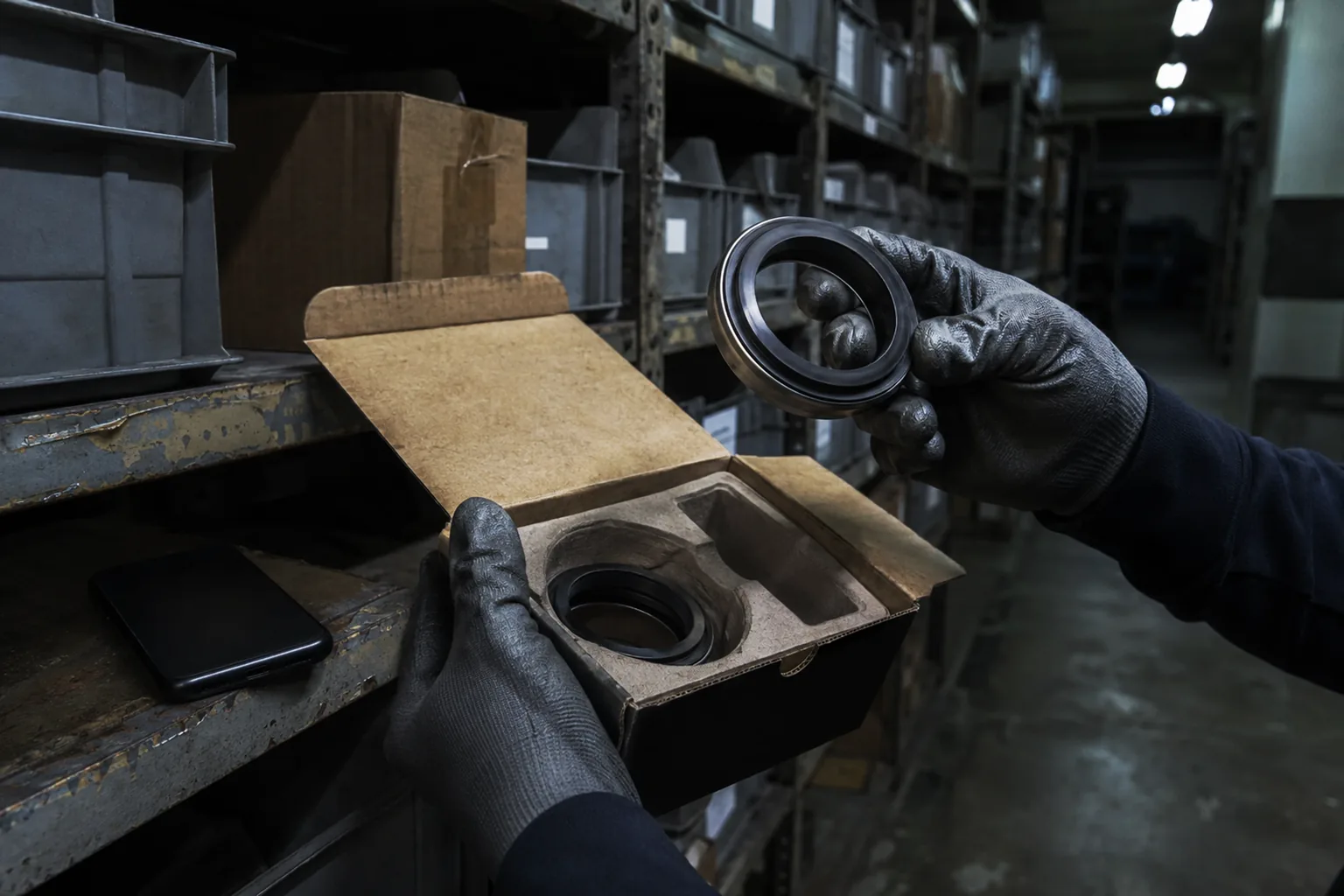
A request for quotation sent at 2 a.m. comes back usable when it carries fifteen fields, from the installed configuration and the nameplate serial through the substitution rule, the freight expectation and the reference the supplier must quote back. In the American Water Works Association’s 2026 State of the Water Industry report, 54.2% of the 769 utility respondents to that question said emergency repairs and system failures lead to overtime often or always. That is a frequency of occurrence, not a share of overtime hours and not a share of cost. Then compare the replies on one column: delivered when, all in.
Key takeaways
- The round trip is the expensive failure, not the price. Every missing field costs a full cycle: your question at 02:40, their answer at 09:15, and a ship date that has already moved a day.
- Quote the machine, not the catalogue. Asset tag, nameplate serial and rebuild history pin the configuration. A model number pins nothing, and after a contractor rebuild it can be wrong in a way nobody at the utility can detect.
- State the substitution rule rather than letting the supplier guess it. Silence reads as “identical only” to one supplier and “anything that fits” to the next.
- Three quotes are rarely commensurable. Different units of issue, freight terms, stock positions, warranty start dates and return terms mean the lowest unit price is often neither the cheapest nor the fastest option overall.
- Normalise to one column: delivered when, all in. A date and an hour at your receiving point, on your clock, after cut-off, transit, weekends and your own receiving hours.
- Keep a column for what each supplier assumed that the others did not. If that cell is empty, the quote has not been read yet.
- The thresholds that matter at 2 a.m. are in your own written procedure. Find them before the fault. This guide covers request completeness and quote comparison, not purchasing law.
Why a request sent at 2 a.m. comes back unusable
The after-hours request is a different document from the routine one, because the correction loop is broken. In daylight, an incomplete request gets a phone call and the gap closes inside that call. At night, a duty desk or a shared inbox reads it once, answers what it can and asks for what it cannot. That question then waits for somebody at your end to wake up. Two missing fields can add a working day to a repair that takes two hours.
So the design goal is narrow and testable. The supplier must be able to answer completely and correctly without asking you anything.
Table 1: the request-for-quotation content checklist
Copy this. If a field cannot be filled, write “unknown” into the request rather than omitting it: a stated unknown is something a supplier can price around, and a silent gap is something they will ask about.
| Field | What to send | What goes wrong when it is missing |
|---|---|---|
| 1. Asset identity and installed configuration | Tag, service, and the configuration as installed: impeller trim, shaft and sleeve size, elastomer, motor frame, orientation, drive arrangement. Not the catalogue model alone | The supplier quotes the base model. The part fits the drawing and not the machine |
| 2. Nameplate and serial data | A photograph of the nameplate plus the transcribed serial, model, build code and year | Configuration cannot be pinned. They ask for the serial, and the serial is on a nameplate at a station nobody is standing in |
| 3. Rebuild and repair history | Every rebuild with date, who performed it, and any component that changed. Say plainly when the history is undocumented | The quote reflects the original build. The part arrives to a machine that stopped matching it years ago |
| 4. Exact part identification and supersession | The number marked on the failed part, the number in your record if it differs, and a photograph of the markings. Ask them to state any superseding number and whether it is a drop-in | Two part numbers stay in play and you learn which one shipped at the receiving door |
| 5. Quantity and unit of issue | The count, the unit (each, pair, set, kit), and whether gaskets, O-rings, sleeves and fasteners are inside that unit | Quoted per kit, ordered per each. Or the assembly arrives without the elastomer set everyone assumed was in it |
| 6. Required-by time and what happens after it | A date and an hour on your clock, plus one sentence of consequence: standby exposure, permit condition, wet-weather forecast | They optimise for price, because nothing told them expediting was worth quoting |
| 7. Delivery point and receiving hours | Address, dock or gate, the hours a person is present, and whether an after-hours or weekend delivery can be arranged | Freight reaches a locked yard at 18:30 and returns to the terminal until Monday |
| 8. Who is authorised to receive | A named person or role with a phone number, plus a second name for the hours the first is unreachable | The driver cannot get a signature and the part leaves on the truck it arrived on |
| 9. Site access constraints | Escort requirement, height and weight limits, forklift or tail lift availability, permit conditions. Send gate codes separately, never in the request | Delivery is attempted with equipment the site cannot receive, and the retry is a day later |
| 10. Substitution rule | State it: identical only; supersession acceptable; equivalent acceptable if it matches the stated configuration and the difference is declared; nothing without written approval | One supplier substitutes silently, another withholds the substitution that would have saved two days, and the replies cannot be compared |
| 11. Partial shipment | Whether a partial helps, and which line is the critical path | The order waits on its slowest line, and tonight’s item sits behind it in a consolidated shipment |
| 12. Freight expectation | Service level to be quoted, who books, who pays, and whether you will use your own carrier account | The quote says freight to be advised, which is not a price and cannot be compared with one |
| 13. Return terms on a wrong part | The return window, restocking percentage, who pays return freight, and whether terms differ if the error was in your request | You keep an unusable part at full price, because nobody agreed terms while the order was still unplaced |
| 14. Reference the supplier must quote back | One reference for the event: work order, request number and asset tag, on the quote, the acknowledgment, the packing list and the invoice | Three quotes and a pallet nobody can tie to the fault. Receiving cannot match it and closeout becomes recollection |
| 15. Requester and after-hours contact | Who can answer tonight, on a number that is answered, plus a fallback name | They have one question at 03:10, email it, and your quote waits until 09:00 for a one-line answer |
Send the same fifteen fields to every supplier in the same order, because comparability starts in the request. Read them in that order if you are phoning, then send the written version to the same person before you hang up. Keep internal cost estimates out of it. If you check only three fields before pressing send, check 1, 6 and 10: configuration, consequence and the substitution rule. Each of the three, left blank, turns a quote into a question.
Table 2: the quote comparison sheet
Build this as one row per quote in a spreadsheet, with these columns. It is set out here as column definitions because a web page is narrower than a sheet, and because the rule in the third column is the part that does the work.
| Column | What you record | The rule that makes it comparable |
|---|---|---|
| Quote reference and supplier | Their quote number, your request number, who issued it, when it arrived | A quote with no number cannot be reconciled to a delivery |
| Part offered | The part number as quoted, and its class: as requested, manufacturer supersession, or substitution | If it is not the number you asked for, the row is not comparable until the difference is stated in writing |
| Stock status | On the shelf, allocated, in transit, or to be manufactured, and at which location | Treat anything other than “on the shelf at a named location” as an estimate, not a commitment |
| Unit of issue and quantity | Each, pair, set or kit, and what the unit contains | Convert every quote to your unit before comparing a price |
| Unit price and extended price | Currency and the extended total at your quantity | Compare extended prices, never unit prices, once units differ |
| Freight terms and cost | Carrier, service level, cost, who books, where title and risk transfer | Freight unstated is entered as unknown, never as zero |
| Surcharges, minimums and taxes | Handling, hazardous fees, after-hours pick fees, order minimums, tax treatment | This is the difference between two quotes that look like the same price |
| Ship-from location and order cut-off | The origin, and the local time by which an order must be placed to ship today | A 15:00 cut-off in another time zone is the real deadline, and it can fall earlier in your day than in theirs |
| Committed ship date | What they committed to, and whether it is a commitment or an estimate | Record their own word for it. “Should ship” is not a ship date |
| Transit time | Service level and days, marked business or calendar | Convert both to hours on your clock. A carrier’s next day is not your night shift’s next day |
| Delivered when, all in | The date and hour the part is at your receiving point, after cut-off, transit, weekends and your receiving hours | The only column on which lead time gets compared. Every other timing column feeds it |
| Total delivered cost | Extended price plus freight plus surcharges, at your quantity | Lowest unit price and lowest delivered cost need not be the same supplier, and the sheet is where you find out |
| Warranty | Duration, what starts the clock (ship, receipt or commissioning), what it covers | A warranty starting at shipment is shorter than one starting at commissioning by the length of your outage |
| Return terms | Window, restocking percentage, who pays return freight, whether a fitted part returns | Price the wrong-part case before you order. Afterwards you are negotiating with the money already spent |
| Payment terms | Net terms, prepayment, and whether a purchasing card is accepted out of hours | A supplier who cannot take a card tonight is often a supplier who cannot ship tonight |
| What this supplier assumed that the others did not | Every assumption written into the quote or implied by it | If this cell is empty, the quote has not been read yet |
The two columns that decide it
Delivered when, all in. Lead time is the easiest field on a quote to misread, because suppliers state it in whichever unit flatters them: ships in 24 hours, next day air, 1 to 3 days, in stock. None of those is a time at your gate. Do the arithmetic once and write a date and an hour. If a supplier will not give you enough to compute it, that is itself a finding, and the cell reads unknown.
What this supplier assumed. The assumptions that matter are the ones only one supplier made: a different unit of issue, a substitution offered without being labelled as one, stock subject to prior sale, a price valid 24 hours, freight excluded, a warranty half the length of the others. Writing them down converts a set of documents that look alike into a set of decisions that do not.
A worked example: the P-204 seal assembly
The scenario below is invented and its numbers are synthetic. No customer, no supplier, no measurement. It is here to show the sheet working.
Submersible pump P-204 at a remote wastewater lift station tripped on overload. The lower bearing failed and took the mechanical seal with it, and the manufacturer supplies bearing and seal as one assembly. The station has two duty pumps and no third, the survivor is carrying the flow, and rain is forecast in 36 hours. The pump was rebuilt in 2021 by a contractor and the rebuild is undocumented, which the request says in those words. It goes out at 02:10 on a Wednesday with all fifteen fields. Three replies are in by 07:00.
| Field | A, manufacturer’s distributor | B, regional pump shop | C, national distributor |
|---|---|---|---|
| Part offered | Assembly as requested, superseded number stated, confirmed drop-in | Seal and bearing sourced separately as equivalents | Assembly as requested, original number |
| Stock status | On the shelf, named branch | Seal on the shelf locally, bearing 3 days | In stock at hub, allocation not confirmed |
| Unit of issue | Kit, includes O-rings and sleeve | Two lines, elastomers quoted separately | Kit, sleeve not included |
| Extended price | $2,480 | $1,915 plus $95 elastomers | $2,290 |
| Freight | Next-day air, $310, they book | Own vehicle, no charge, local | To be advised |
| Cut-off | 15:00 their time, 2 hours ahead of yours | None, local delivery | 14:00 their time |
| Committed ship | Today, confirmed | Seal today, bearing on receipt | 1 to 3 days, estimate |
| Delivered when, all in | Thursday 10:30, at the dock, in hours | Seal Wednesday 14:00, complete Monday | Friday earliest, Tuesday realistic |
| Total delivered cost | $2,790 | $2,010 plus the substitution risk | $2,290 plus unknown freight |
| Warranty | 12 months from shipment | 6 months from receipt, void if fitted to a rebuilt assembly | 12 months from invoice |
| Return terms | 30 days, 25% restocking, you pay freight back | Non-returnable once fitted | 15 days, 20% plus return freight |
| Payment | Net 30, card accepted | Card only out of hours | Net 45, no card out of hours |
| What they assumed that others did not | Price valid 24 hours, stock subject to prior sale | That an equivalent bearing is acceptable, and that the 2021 rebuild did not change the shaft sleeve | That freight is excluded, and that the ship date is an estimate rather than a commitment |
Read the price rows first and B wins twice: it is the lowest number on the page and, once freight and surcharges are in, the lowest delivered cost as well. Then read the timing row. The only reply carrying a date and an hour is A, and A is the only one that beats the rain.
B is both genuinely attractive and genuinely unsafe, and the sheet is what makes that visible. Its assumption cell holds the sentence that decides everything: it assumes the 2021 rebuild did not change the shaft sleeve, and the request already said the rebuild is undocumented. B is a good option the moment somebody measures the sleeve, and a two-day detour if nobody does. With the assumption column, that question gets answered at 07:15 with a caliper and a photograph. Without it, the answer arrives when the technician tries to fit the part.
C is the reply that looks competitive until the sheet is filled in. Its kit excludes the sleeve, so its price is not yet comparable with A’s. Its freight is to be advised on an air-freight-sized item, its allocation is unconfirmed, and its ship date is one the supplier itself called an estimate. Not a cheaper quote. A less complete one.
The substitution question, answered before the quote comes back
Scroll sideways to see the whole drawing.
Figure 1. The substitution question, answered before the quote comes back. A decision tree triggered by a supplier offering a part that is not the one requested. The question at the top asks whether the offered part is interchangeable with the installed configuration. The fast branch, taken when the answer is yes and the installed configuration is documented, runs: confirm the interchange against the rebuild record, state the acceptance in writing, release the order, and record which part was actually fitted. The slow branch, taken when the configuration is unknown or the interchange is unverified, is hatched and runs: stop, get the nameplate and rebuild history off the machine, ask the supplier for the interchange evidence, and expect the delay this adds.
Emergency purchasing authority, in brief
Sole-source justification is out of scope here. It has its own documentation requirements and is decided by your policy and your funding source, not by a checklist.
Two things are worth knowing before the fault, and neither is legal advice. First, when a purchase is charged to a federal award, the procurement methods in 2 CFR 200.320 apply to most recipients and subrecipients, municipal utilities included. Micro-purchases “may be awarded without soliciting competitive price or rate quotations if the recipient or subrecipient considers the price reasonable based on research, experience, purchase history, or other information; and maintains documents to support its conclusion”. Above the micro-purchase threshold and at or below the simplified acquisition threshold, simplified acquisition procedures require price or rate quotations “from an adequate number of qualified sources”, and “unless specified by the Federal agency, the recipient or subrecipient may exercise judgment in determining what number is adequate”. Above the simplified acquisition threshold, “formal procurement methods are required”, and those methods “are competitive and require public notice”. A noncompetitive method is available only in the circumstances listed at 200.320(c), one of which is that “the public exigency or emergency for the requirement will not permit a delay resulting from providing public notice of a competitive solicitation”. States and Indian Tribes are routed differently: 2 CFR 200.317 directs a State or Indian Tribe to follow the same policies and procedures it uses for procurements with non-Federal funds, to fall back on 200.318 through 200.327 if it has none, and in either case to comply with 200.321, 200.322, 200.323 and 200.327. Second, most utility purchases are not on a federal award, and are governed instead by state law, local ordinance and the utility’s own purchasing policy.
One point of vintage, because it bites anyone quoting these sections from a saved copy. OMB rewrote this part in “Guidance for Federal Financial Assistance”, 89 FR 30046, published 22 April 2024 and effective 1 October 2024. Everything quoted above is the current text. Older quotations still in circulation, including any taken from the 2024 annual edition of the CFR, say “non-Federal entity” where the current text says “recipient or subrecipient”, call 200.320(a)(2) “small purchases” rather than “simplified acquisitions”, and carry a public-advertising sentence that the current paragraph (b) no longer contains. Check the vintage of a procurement quotation before you rely on it, including this one.
The practical version is shorter. Know your thresholds, know who can release a purchase at 03:00 and by what mechanism, and know it before the night it matters.
One caution on a nearby number. The AWWA 2026 report’s Figure 16 reports what overtime policies and procedures utilities have, with 46.5% of 770 utility respondents reporting basic overtime approval procedures, 32.7% reporting no formal policies or procedures and 13.0% reporting comprehensive overtime management policies. Those are three of the response options, not all of them. The exhibit sits in the overtime section and describes overtime policy, not purchasing policy. It is included here only because it is sometimes misread as the latter.
What to do with the sheet after the part arrives
Record the actual delivered time against the promised one, and whether the part fitted first time. After a dozen events that is the supplier scorecard that matters at 2 a.m.: who commits to a date and an hour, who meets it, and who ships the right thing when the configuration data is imperfect. It is a different ranking from the one an annual pricing review produces.
Keep the assumption column with the closed work order. When the same asset fails again, the fastest route to a usable request is last time’s, corrected, and the rebuild-history line ages best.
Sources
- American Water Works Association, 2026 State of the Water Industry Report, announced 30 April 2026 (AWWA release). The free executive summary states the survey ran “from Sept. 21 to Oct. 31, 2025” with 2,171 water professionals participating, and gives the emergency-repairs figure rounded to 54%. The full report’s Table 18, “Reasons for Overtime” (769 respondents to that question), is a frequency scale of never, rarely, sometimes, often and always; emergency repairs and system failures score 32.1% often plus 22.1% always, which is the 54.2% quoted here. It is a frequency of occurrence, not a share of overtime hours and not a share of overtime cost. The base is described here with the exhibit’s own caption, “Utility Respondents”, rather than with the narrative’s characterisation, because the report is not consistent about the latter: the executive summary attributes the same figure to utility executives in one sentence and to respondents in another. The formal-policy exhibit quoted later is Figure 16 (n=770: 46.5% basic approval procedures, 32.7% no formal policies or procedures, 13.0% comprehensive overtime management); it appears in the same overtime section and describes overtime policy. The full report is behind a request form, so the exhibit numbers and bases are not verifiable from the free summary alone.
- Office of Management and Budget, 2 CFR 200.320, Procurement methods, current text at eCFR 2 CFR 200.320; same text in the 2025 annual edition of the Code of Federal Regulations, Title 2, Volume 1, Section 200.320. Quoted: the micro-purchase award provision at (a)(1)(ii), the simplified acquisition provision at (a)(2)(i), the formal-methods sentences at (b), and the public exigency circumstance at (c)(3).
- Office of Management and Budget, 2 CFR 200.317, Procurements by States and Indian Tribes, current text at eCFR 2 CFR 200.317; 2025 annual edition. Source of the scope sentences above, including “a State or Indian Tribe must follow the same policies and procedures it uses for procurements with non-Federal funds”, the fallback to 200.318 through 200.327 where such policies do not exist, and the placement of all other recipients and subrecipients under 200.318 through 200.327. Scope: Part 200 governs procurement under federal awards and does not by itself govern purchases funded from other sources.
- Office of Management and Budget, Guidance for Federal Financial Assistance, 89 FR 30046, published 22 April 2024, effective 1 October 2024. This is the revision that produced the current wording of both sections and retitled them, and it is why quotations taken from earlier editions of 2 CFR part 200 no longer match the text in force.
- The two tables in this article are EQUA’s own. They are not an industry standard, a certification requirement, or an adaptation of one, and no standards body has reviewed them.
Who wrote this
EQUA AI builds EQUA AIMMS. The two tables above are the work it does on its own.
It pins the part to the installed configuration rather than the nameplate model, checks stock against what is really on the shelf, sends a complete request the first time, and lays the responses out so they can be compared on delivered cost and delivered date instead of headline price. At 03:00 that is the difference between a pump back in service on Thursday and a pump back in service the week after.