
Why Wastewater Maintenance Loses Time After the Alarm
Wastewater plants run 24/7 with aging assets and shrinking crews. The costliest delays start after the alarm, in the digital chase between fault and fix.
Working on a live operating problem? Book Your 20-Minute Assessment
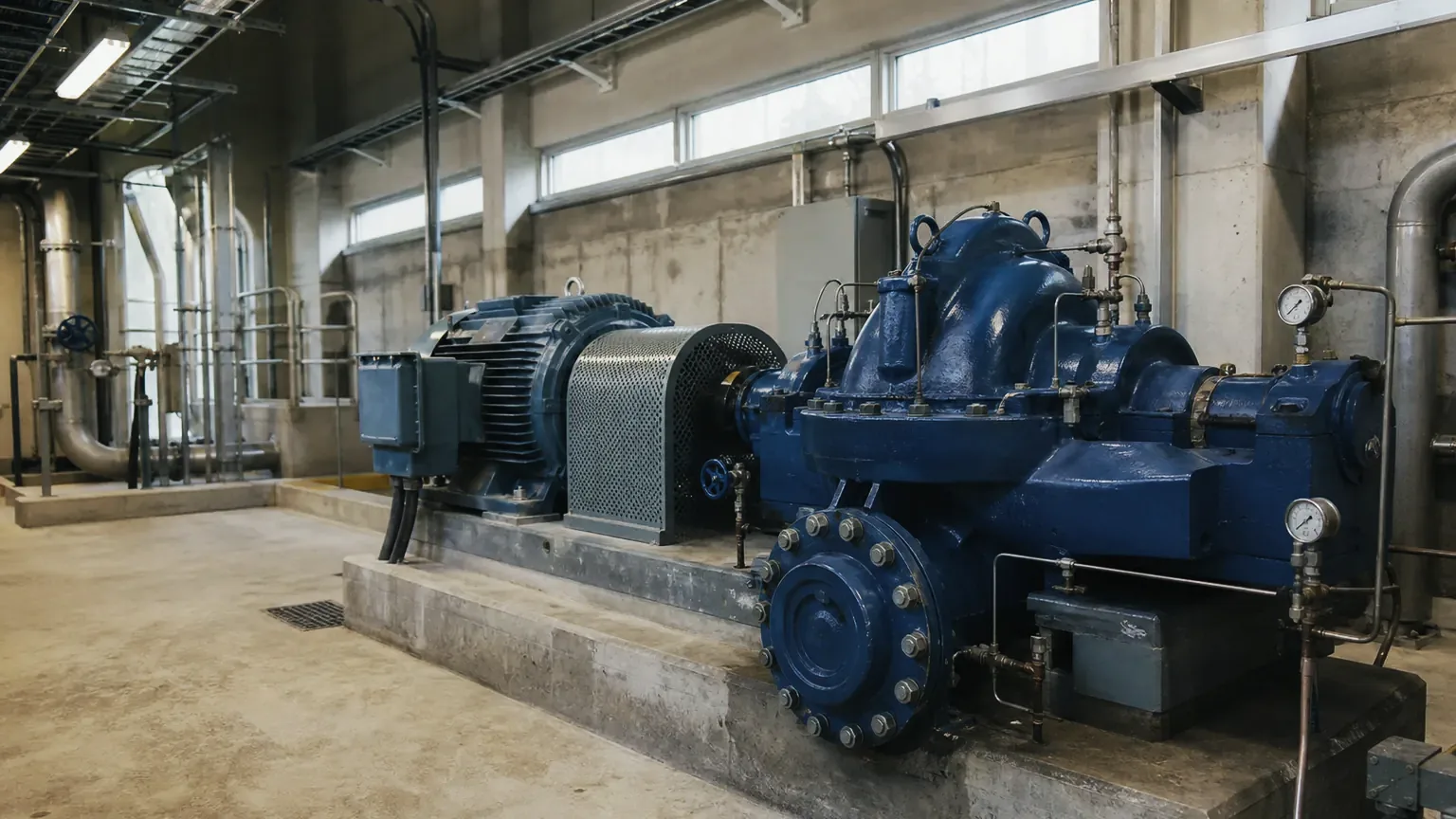
A wastewater treatment plant never closes. Flow arrives every hour of every night, and the equipment that lifts, screens, settles, and treats it runs in some of the harshest service in public infrastructure. When an asset fails, the physical repair is often the fast part. The slow part is everything around it: finding the right records, confirming the exact part, chasing quotes, and waiting on approvals. This article follows a single 2 AM influent pump trip to show where the hours actually go, and what it would take to get them back.
The operating reality
Wastewater maintenance works under constraints that most industries never see.
The plant cannot stop. There is no production pause while a repair waits. Influent keeps arriving, the wet well keeps rising, and permit limits do not flex because a pump is down. Every hour between fault and fix is an hour of reduced redundancy on a process that has to keep running.
The service is harsh. Rags, grit, and grease wrap impellers and wear out volutes. Hydrogen sulfide attacks electrical gear and instrumentation. Headworks screens and grit removal, influent pumps, RAS and WAS pumps, dewatering equipment, and chemical feed systems all take this abuse around the clock.
Wet weather stresses everything at once. Infiltration and inflow can push a plant far above its average flow in MGD terms during a storm. That is exactly when influent pumping has the least margin and a single tripped pump matters most.
The equipment is old and the money is constrained. The EPA reports 17,544 publicly owned treatment works serving 270.4 million people, with $630.1 billion in total clean-water infrastructure needs. Black & Veatch’s 2026 Water Report, based on a survey of more than 600 U.S. water sector stakeholders, found that aging infrastructure again tops the list of challenges facing the sector, and that 70% of respondents cite it among their concerns when assessing system resiliency. Assets stay in service long past their design life, which makes good maintenance records more important, not less.
The people who know the plant are leaving. The same report finds that retirements across engineering, operations and technical roles are creating capital-delivery and technical-capacity risk, and that more than half of respondents, 55%, now outsource engineering and technical staff. Among those whose data or digital strategy is not achieving most or all of its objectives, 71% cite staffing as a barrier. When a mechanic with 30 years on the same pumps retires, the plant loses its fastest diagnostic tool: memory.
The records are scattered. Trends live in SCADA and the historian. Work orders live in the CMMS. O&M manuals live in binders and scanned PDFs. Vendor contacts live in inboxes. Spare parts counts live in spreadsheets. Black & Veatch’s 2025 Water Report, based on a survey of 680 U.S. water sector stakeholders, found that 49% of respondents say they are collecting a lot of data but not leveraging it effectively, up from 42% a year earlier. Wastewater plants do not have a data shortage. They have a retrieval problem.
Purchasing follows public rules. Quote thresholds, purchase order approvals, sole-source justifications, and board sign-offs exist for good reasons. They also mean an urgently needed part can sit in an approval queue while the plant runs on its last spare.
Anatomy of a 2 AM influent pump trip
Consider a common event. At 2:04 AM, SCADA raises a high wet well level alarm. Influent pump 2 has tripped on overload. The remaining pump is keeping up, barely, and rain is in the forecast.
The on-shift operator acknowledges the alarm, checks the wet well trend, and calls the on-call mechanic. So far the system works as designed. Then the digital chase begins.
The mechanic arrives at 2:40 AM and needs answers before touching anything. Did the pump trip on overload, or did an ATS transfer knock it offline during a power blip? What do the amp trends show in the hour before the trip? Has this pump tripped this way before, and what fixed it last time? Which bucket in the MCC feeds it, and what does the lockout/tagout procedure require? Is the suspected part, a mechanical seal or a set of wear rings, actually on the shelf?
None of those answers lives in one place. The amp trend sits in the historian, behind a login the mechanic may not have at 2 AM. The last repair is a two-line entry in the CMMS. The O&M manual is a binder in the office, if the right revision is even there. The seal count is in a spreadsheet last updated months ago. The person who fixed this exact failure years ago retired in the spring.
By the time the mechanic hangs a lock on the MCC bucket and starts the teardown, two hours can be gone. Not one minute of it was spent repairing anything.
Where the hours go
The 2 AM story compresses a pattern that repeats across every shift and every asset class in the plant. The losses fall into a few consistent buckets.
Hands-on repair is one interval inside the longer fault-to-return path
Scroll sideways to see the whole drawing.
Figure 1. Hands-on repair is one interval inside the longer fault-to-return path. A proportional, unitless bar from fault to back in service. The segments are identify the asset, assemble evidence, confirm the cause, clear safety requirements, verify or source the part, obtain approval and access, hands on the equipment, verify return, and capture closeout. Hands on the equipment is emphasized. The figure states no units, no total, and no measured duration.
Resolving what “this pump” even is
The same physical asset carries different names in different systems. It is P-101 in the CMMS, a different tag in SCADA, a third label on the nameplate, and “the east influent pump” in a decade of technician notes. Before anyone can assemble a history, someone has to reconcile those identities by hand. Every search that misses one alias misses part of the story, and the mechanic never knows what the search failed to find.
Manual searching across systems
Even after the asset is identified, the evidence hunt continues. Pull trends from the historian. Search the CMMS for past work orders. Dig through the shared drive for the pump curve and the seal drawing. Ask around for who worked on it last. Each step is minutes to hours of skilled labor spent on retrieval instead of repair, usually by the most experienced person on site.
The exact part, not the close-enough part
Pumps of the same model differ by impeller trim, seal configuration, motor frame, and revision year. Ordering “a seal for that pump” is not enough. The wrong variant turns a one-day repair into a multi-week wait. Confirming the exact variant means finding the original submittal, the nameplate data, or the last invoice, which restarts the search problem all over again.
Phantom inventory
The CMMS says two seals are on hand. The shelf holds one, and it is the wrong variant, because the last emergency consumed a spare that nobody logged. Phantom inventory is worse than an empty shelf: it delays the order until the moment the mechanic is standing in the storeroom discovering the truth.
Supplier chasing and approval waits
Now the part has to be bought. Someone calls or emails suppliers for availability and price, often at hours when nobody answers. Public procurement rules may require multiple quotes above a threshold, then a purchase order, then a signature from someone who is asleep or on vacation. The plant runs with reduced pumping redundancy the entire time, and nobody can see, in one place, exactly what the repair is waiting on.
Closeout that guarantees a repeat
The repair ends at 6 AM with the pump back in service and a work order closed with “replaced seal, returned to service.” Which seal variant, what the insulation resistance read, what the mechanic noticed about the bearing, which supplier had stock: none of it is captured. The next trip on this pump will repeat the entire chase from the beginning. This is also how veteran knowledge leaves the plant, one thin closeout at a time.
What good looks like
None of these losses require new pumps or a new CMMS to fix. They require the digital work around the repair to be handled as seriously as the repair itself.
Evidence at the point of work. When the alarm sounds, the responder should see one picture of the asset: the relevant trends, the past failures, the manual pages, and the safety requirements, already matched to the right pump regardless of which system calls it what.
Guided checks. The diagnostic path a 30-year mechanic would follow, checking the ATS event log before condemning a motor, verifying the overload before pulling the pump, should be available to the 3-year mechanic on night call.
Blocker visibility. At any moment, the supervisor should be able to answer one question without making phone calls: what is this repair waiting on right now, a part, a quote, an approval, or a person?
Parts certainty. The exact variant, confirmed against the asset’s real history, and an inventory count that reflects the shelf, before anyone drives to the storeroom.
Purchasing that moves within the rules. Quotes gathered and compared quickly, approval requests routed to the right people the moment the need is known, and the utility’s own thresholds and policies followed every time, not worked around.
Closeout that preserves knowledge. Recording what was found, what was done, and what was learned should take minutes, not an evening of typing, so that the next event starts from the last one instead of from zero.
The work between fault and fix
This is the gap EQUA AIMMS is built to close, starting slightly earlier than the alarm. AIMMS reads SCADA, historian and sensor data and detects the anomaly itself, so the clock can start when the deviation appears rather than when somebody notices it. It connects to SCADA and the historian read-only, never writes to controls, and makes no judgments about the treatment process itself. Licensed operators run the plant and technicians make the repair. AIMMS handles the digital work around it: assembling evidence, guiding troubleshooting, tracking safety steps, confirming parts, coordinating suppliers and quotes, routing approvals under rules the utility defines, and capturing closeout so each repair becomes reusable history.
The alarm will always come at 2 AM. The chase after it does not have to.
Sources
Black & Veatch, 2026 Water Report, 15th annual edition, survey of more than 600 U.S. water sector stakeholders, June 2026. Figures cited: aging infrastructure again topping the list of challenges and cited by 70% among resiliency concerns; 55% outsourcing engineering and technical staff; 71% citing staffing as a barrier among respondents not achieving most or all of their data or digital strategy objectives. Black & Veatch, 2025 Water Report, survey of 680 U.S. water sector stakeholders. U.S. Environmental Protection Agency, Clean Watersheds Needs Survey.
Corrected August 13, 2026, and the correction restated on August 17. Two figures from the 2026 Water Report were previously attributed more broadly than the report supports: 66% is the share citing treatment upgrades as the top operational challenge created by regulatory requirements (FIG. 17), not aging infrastructure, and the 71% staffing figure applies specifically to respondents whose digital-strategy objectives are not being met rather than to utility operations generally. Black & Veatch’s own press release for the report does state the broader versions of both, so the two primary sources disagree. Where a press release and the full report conflict, this site follows the report and prints the question the figure answered. Aging infrastructure does top the list of sector challenges in FIG. 1, with no percentage attached to it in the report’s prose.