Follow a critical pump from alarm to fix

The alarm is automatic.
The repair path should be too.

At 2:03 AM during wet-weather flow, Influent Pump P-204 trips. The wet well rises, plant capacity falls, and a capable technician is forced into a digital chase across alarms, manuals, records, parts, suppliers, and approvals. Follow the same fault with AIMMS on the team.

Pre-authored wastewater scenario. Sources, actions, timings, and approval gates are configured and validated for each customer.

The asset

One pump. One night. Six stages of work.

Everything below happens around a single machine in a room like this one. The physical repair is a few hours of skilled hands. The delay is almost never the repair; it is the evidence, the parts, the suppliers, and the approvals that have to be assembled around it before a technician can start.

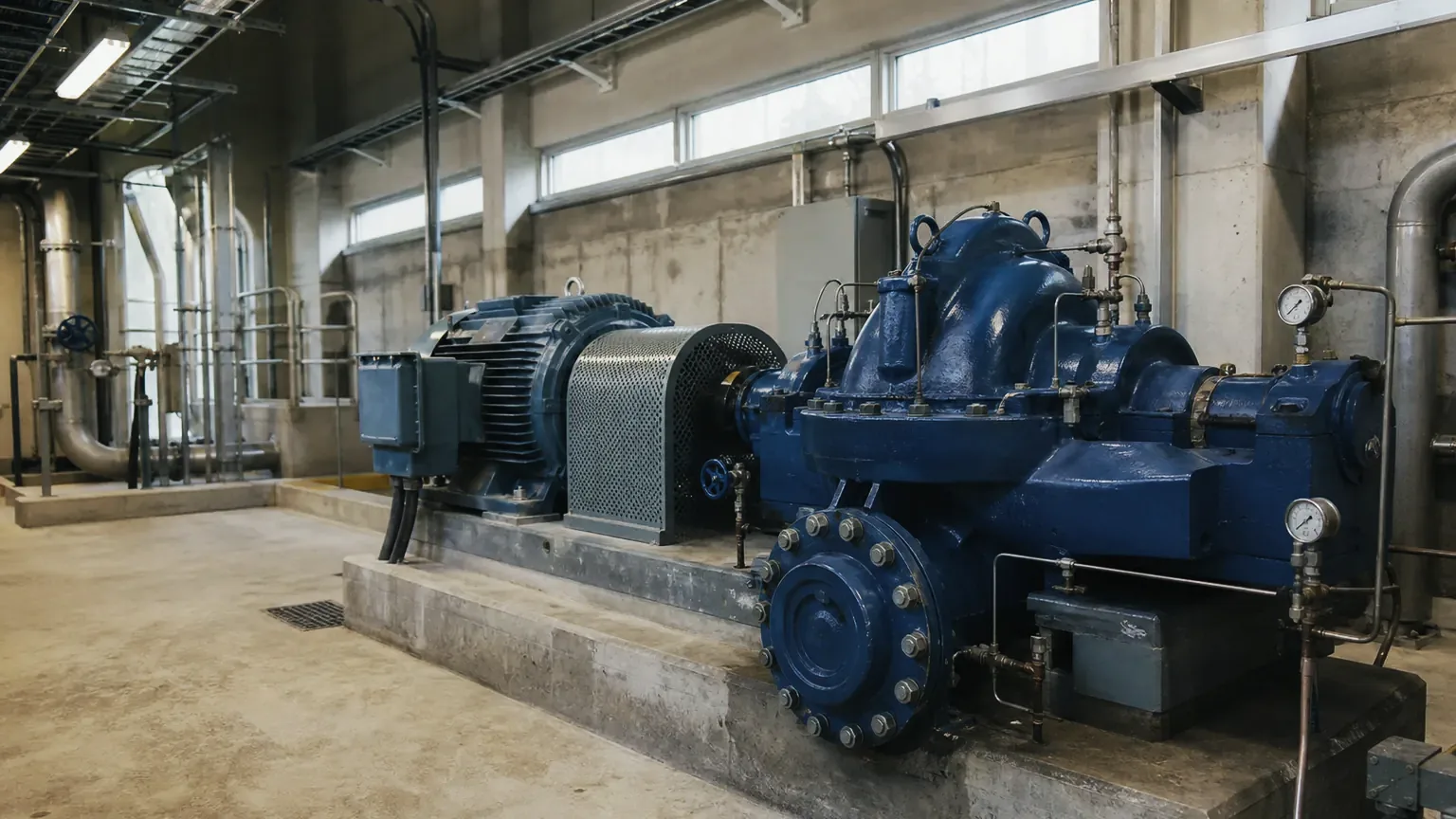
pump room: two large split-case pump sets with motors, discharge piping, and pressure gauges on a concrete plinth.
An influent pump gallery. A duty pump goes from running to out of service in one alarm. Everything after that is coordination.

01 Fault

02:03:11 · Critical event

AIMMS receives the fault before the digital chase begins.

The permitted SCADA event and recent historian context enter AIMMS through a read-only connection. The event is linked to the correct asset and current operating condition, the right people are alerted, and the work-order flow starts with the information already available.

SCADA event · read-only
Asset
P-204 · Influent Pump No. 2
Event
Drive trip · flow not recovering
Condition
Wet-weather flow · wet well rising
Started
Work order drafted · team alerted

AIMMS handles: event intake, asset match, severity context, recent readings, case creation.

People handle: operational acknowledgment and site response under existing procedures.
02 Understand

Context loaded

The information stops living in separate places.

AIMMS assembles the asset history, manuals, prior work orders, procedures, known failure patterns, parts records, inventory state, supplier context, and current readings. The technician does not have to search five systems while the asset is down.

  • Asset history 14 events · 3 years
  • Manual excerpt Section 6.3 · suction
  • Prior repair Nov 2025 · same symptom
  • Current readings Amps high · flow low
  • Parts and stock Impeller kit · checking
  • Open work 1 related work order

Technician connected

Ask AIMMS by text or live voice. It asks what matters next.

Technician · voice

Pump P-204 tripped. I hear a rough, gravel-like sound at the suction side. The motor starts, but flow does not recover.

AIMMS

Confirm lockout and site procedure before inspection. Can you share the suction pressure, motor current, and a photo of the strainer differential indicator?

Diagnosis refined

Likely causes are ranked, tested, and backed by evidence.

  1. Suction obstruction or clogged strainer High confidence

    Supported by sound, pressure change, and recent loading.

  2. Impeller obstruction Medium confidence

    Requires inspection after isolation.

  3. Loss of prime or air ingress Lower confidence

    Current readings do not fully support it.

AIMMS shows what it knows, what it does not know, and what evidence would change the answer. It asks for the checks that settle the difference.

03 Prepare

Work coming together

The repair chase becomes one clear, guided path.

In the maintenance workspace, the diagnosis, safety requirements, procedure, tools, exact parts, inventory status, supplier path, and required approvals come together around the repair. What is ready is visible. So is what is blocking the fix.

What is blocking the repair P-204 · Influent Pump
  • Evidence Sufficient. Sources linked to the case Clear
  • Guidance Check strainer differential first Clear
  • Safety Lockout confirmation pending in the field Pending
  • Part One local wear kit found; identity check pending In progress
  • Supplier Replenishment RFQ waits for local reservation Pending
  • Approval Critical-spare reservation needs supervisor review Pending

A state changes only when new evidence or an authorized decision is recorded.

Is the exact part available and usable?

In stock

  1. Verify the exact variant against the asset
  2. Confirm usable stock, not phantom inventory
  3. Reserve the part and prepare the pick list
  4. Stage the job kit and move the work forward

Out of stock

  1. Identify approved alternates
  2. Prepare and send approved supplier RFQs
  3. Read quote replies and PDFs, compare price and lead time
  4. Route the purchase action and track the ETA

No phantom stock. No inbox chase. No retyping. No close-enough part.

Customer policy applied

Only the approvals your organization requires.

The workflow checks roles, permissions, spend limits, safety policies, asset criticality, and action type. Low-risk actions can move within policy. High-impact actions route to the required owner. If the underlying facts change, AIMMS revalidates before acting.

04 Repair

Permitted actions moving

The technician fixes the pump. AIMMS keeps the digital work moving.

While the physical repair happens, AIMMS completes the digital actions the customer has permitted: reserving the verified local kit, preparing replenishment outreach, reading approved supplier replies, routing approvals, notifying stakeholders, and keeping the internal AIMMS work record current. Every action produces a receipt.

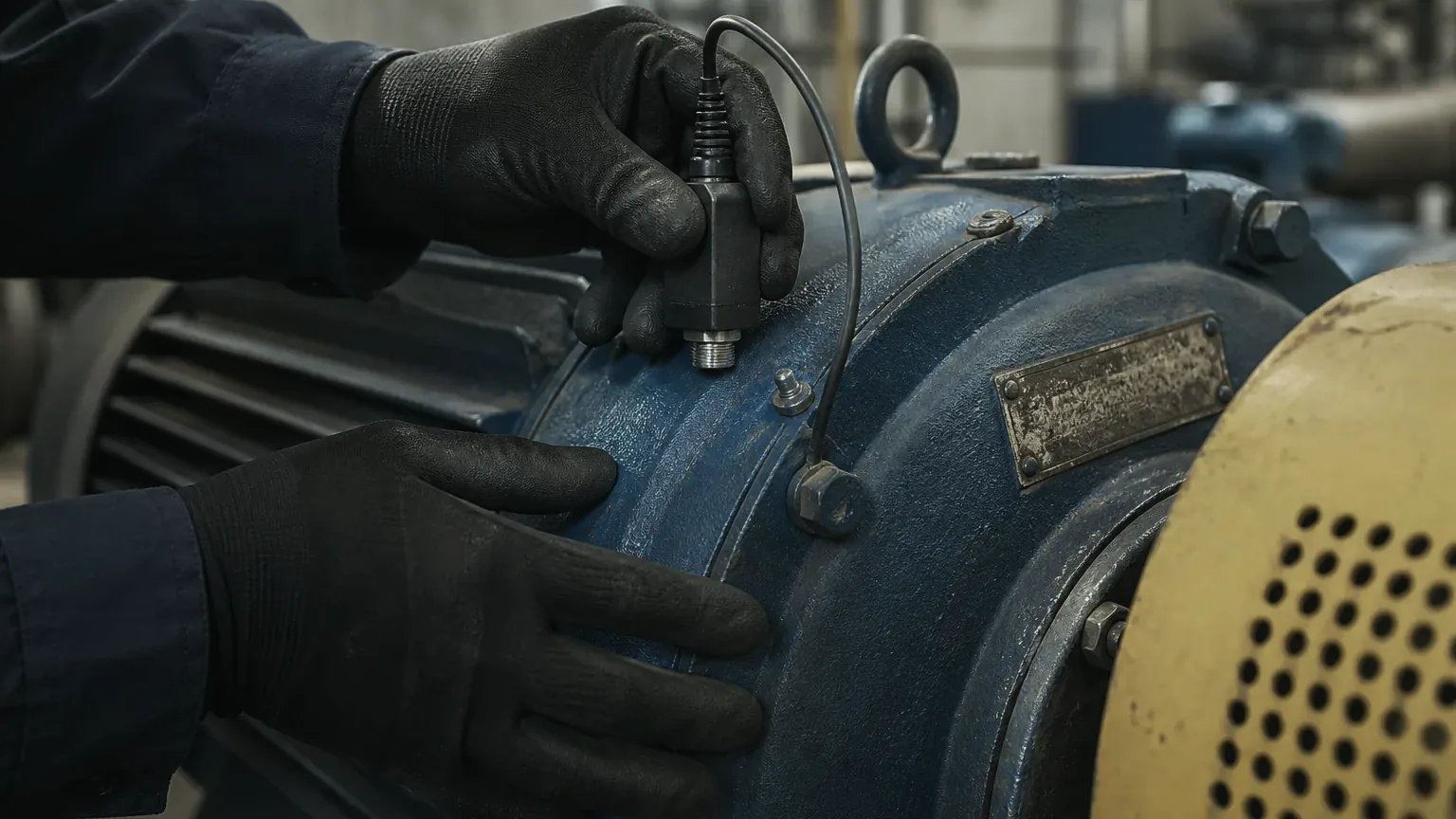
field inspection: gloved hands holding a handheld probe against the bearing housing of an electric motor.
A bearing inspection. Isolation, inspection, and the physical repair stay with qualified people. AIMMS performs no physical work and issues no equipment commands.

The people

Isolate, inspect, clear the suction path, replace the wear parts, restore the pump. Physical work stays with qualified people.

AIMMS, at the same time

  • 03:12Local kit reserved · pick list issued
  • 03:18Replenishment RFQ approved and sent
  • 03:26Supplier reply read · quote extracted
  • 03:41AIMMS work record updated · team notified

05 Return

Return verified

The asset returns. The record closes cleanly.

The technician confirms final readings and operating condition. AIMMS supports the verification checks, captures closeout by voice or text, and keeps the operating record current, so the work ends documented instead of half-remembered.

05:41 · Return verified
  • Flow and current back in normal band
  • Cause confirmed: suction obstruction
  • Part used: impeller wear kit
  • Closeout captured by voice note
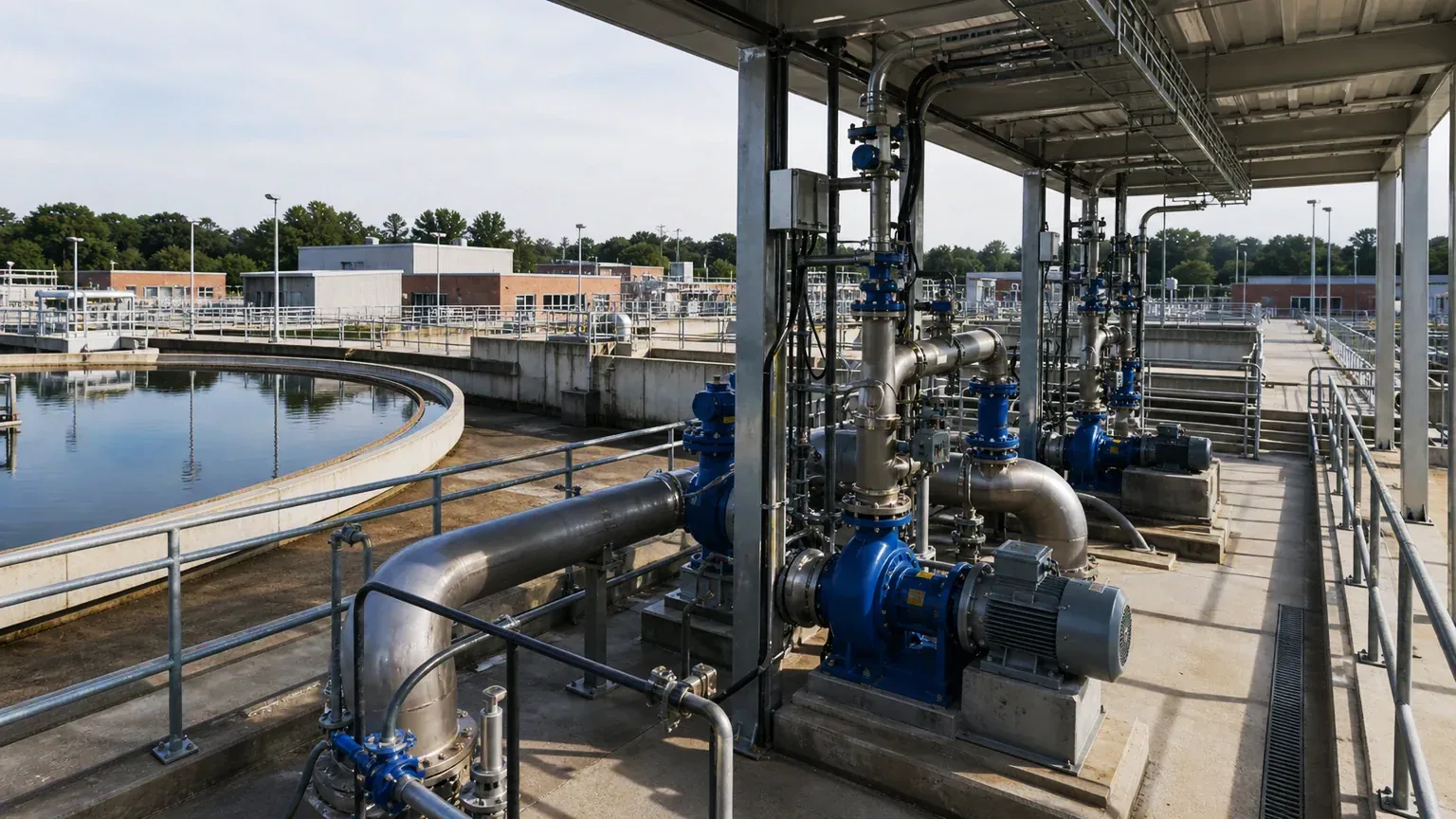
treatment plant deck: process piping and pump sets beside a circular clarifier basin.
A treatment plant. The work is finished when the readings hold and the record says so, not when the technician leaves the site.

06 Learn

Saved for next time

Every completed repair makes the next repair faster.

AIMMS preserves what failed, what fixed it, which part was used, which evidence mattered, what approvals occurred, and what the next shift should know. The next fault on this asset starts with the winning fix instead of a blank page.

  • Cause
  • Symptom pattern
  • Confirm tests
  • Part
  • Supplier
  • Procedure
  • Final readings
  • Technician insight
The operating contract

The same seven questions, answered at every stage.

What starts it, what AIMMS reads, what it does, what you decide, what happens when something is missing, what is left behind, and what a pilot measures. Select any stage. The answers do not change shape, which is what makes them comparable.

Scroll to step through all six, or select any stage directly.

Select a fault-to-fix stage

Pre-authored scenario. It is not a product screenshot or customer record.

What starts it An alarm, an inspection finding, or a technician reporting by voice, text, photo or video.

AIMMS reads
Read-only alarm and historian context, the asset record, and whatever the field sends.
AIMMS does
Opens the case against the asset, captures the operating impact, and starts the clock.
You decide
Operations decide what the fault means for the process and whether the asset comes off line.
If something is missing
If the asset cannot be identified, the case opens as unassigned and asks a person to name it rather than guessing.

What remains A time-stamped fault record with the evidence that arrived with it.

A pilot measures Fault-to-ready-work time

What starts it The case is open and the technician needs to know what this asset has done before.

AIMMS reads
Manuals, prior work orders, the trend before the alarm, past repairs on the same asset, field photos.
AIMMS does
Assembles all of it into one view where every line says which record it came from, and states what it is not sure about.
You decide
Qualified people accept or reject the likely causes. Nothing is diagnosed on the visitor’s behalf.
If something is missing
If a source is unreachable or stale, it is shown as unreachable or stale. Missing evidence is never filled in from somewhere plausible.

What remains A working context with each claim traced to its source and its age.

A pilot measures Expert escalations

What starts it The cause is confirmed and the work needs to become executable.

AIMMS reads
The installed configuration, the parts record, usable stock, supplier terms, approval rules, safety procedures.
AIMMS does
Reconciles the part against what is actually installed, checks stock, prepares the sourcing route, and routes the approval with its evidence attached.
You decide
Your roles decide. Spend limits, approval gates and safety release are set by you and not by us.
If something is missing
A denied gate stays denied. A missing approval holds the action and names the person it is waiting on.

What remains A work package: confirmed part, sourcing route, approval trail, safe work path.

A pilot measures Part certainty, and supplier cycle where sourcing is involved

What starts it The package is released and the crew goes to the asset.

AIMMS reads
The released package, and whatever the crew reports while the work is happening.
AIMMS does
Keeps the parts, supplier, approval, notification and record tasks moving while the crew works. It performs no physical work.
You decide
Qualified people do the repair. Isolation, safety release and every physical action stay with them.
If something is missing
If the job changes in the field, the case reopens the affected step rather than closing over it.

What remains A running record of what was done, by whom, and against which approval.

A pilot measures Downtime

What starts it The physical work is finished and the asset is ready to be proven.

AIMMS reads
Post-repair readings, test results, and the verification your procedures require.
AIMMS does
Assembles the return evidence in the form your procedure asks for, and holds the record open until it is complete.
You decide
Your personnel verify the outcome and authorize return to service. AIMMS never returns an asset to service.
If something is missing
If verification is incomplete, the case stays open and says which check is outstanding.

What remains A return record signed by the person who authorized it.

A pilot measures Downtime, measured to the moment your operator authorizes return

What starts it The asset is back and the record is complete.

AIMMS reads
Everything the case accumulated: readings, part used, decisions, outcome, field notes.
AIMMS does
Keeps it attached to the asset so the next crew starts from it instead of rebuilding it.
You decide
Your systems of record stay authoritative and receive only what you approve.
If something is missing
Nothing is written back to an external system until that integration is configured, tested and approved by you.

What remains Asset memory the next fault can open in one place.

A pilot measures Closeout completeness

SCADA read-only · No control writes · Customer authority required

See AIMMS Do the Work
The eighth question

What may AIMMS do here, and who set that ceiling?

Every action class carries an autonomy ceiling the customer sets. Raise it, lower it, or deny it outright; a denied gate stays denied, and nothing here is a default we chose.

Authority plate

One possible configuration. Not a default, and not a product claim.

Autonomy setting

Each customer sets the ceiling per workflow. Moving it changes how much of the digital work AIMMS completes. It never moves the boundary.

The plate below now shows

Every configurable action waits for release AIMMS prepares the digital work. A named person releases every action.

Two low-risk actions complete within policy Evidence assembly and record drafting move to AIMMS. Higher-consequence actions still wait.

Four actions complete within policy Evidence, records, approvals, and stock reservation move to AIMMS. Spend still waits for release.

Action AIMMS completes AIMMS drafts, person releases Person only Never
Digital work around the repair · customer-configured
Autonomy ceiling · set by the customer
Assemble the evidence from permitted sources AIMMS completes it AIMMS drafts, a person releases
Draft the work record and the closeout AIMMS completes it AIMMS drafts, a person releases
Autonomy ceiling · set by the customer
Request approval from the named owner AIMMS completes it AIMMS drafts, a person releases
Reserve a part already in stock AIMMS completes it AIMMS drafts, a person releases
Autonomy ceiling · set by the customer
Request quotes from approved suppliers AIMMS completes it AIMMS drafts, a person releases
Send the purchase order to the supplier AIMMS completes it AIMMS drafts, a person releases
Human authority · not configurable
Diagnose the failure and do the physical work A qualified person only
Decide return to service A qualified person only
The permanent boundary · not configurable
Write to a PLC, DCS, or SCADA system Never. Outside the boundary.
Change a setpoint Never. Outside the boundary.
Restart a pump or start a motor Never. Outside the boundary.
Operate an interlock or command an actuator Never. Outside the boundary.

The plate scrolls sideways on a narrow screen. The action column stays in place.

  • AIMMS completes it within policy.
  • AIMMS drafts it, a named person releases it.
  • A qualified person does it.
  • Outside the boundary. Never.

AIMMS never writes to PLC, DCS, or SCADA and never executes setpoints, restarts, interlocks, or actuator commands. SCADA and historian context is read-only.

Customer-defined autonomy

Autonomy is a customer setting, not an all-or-nothing promise.

The customer defines the roles, tools, data, spend limits, safety policies, approval gates, and write permissions available to each workflow.

  1. 01

    Recommend

    AIMMS analyzes and prepares the next action for a person to take.

  2. 02

    Draft

    AIMMS creates the work order, message, RFQ, PO, closeout, or update for review.

  3. 03

    Approve then act

    AIMMS completes the permitted digital action after the required owner approves.

  4. 04

    Autonomous within policy

    AIMMS completes low-risk, pre-authorized actions and records the receipt.

High-impact actions, and any action whose underlying facts changed, route back to the right person before AIMMS acts.

One workspace, two scopes

The whole repair in one live place, and the whole operation one step back.

From the first fault the workspace holds what the team needs to move this repair, and makes visible what is blocking it. Step back and the same records say what is down, blocked, waiting, in progress, under review or complete, without anyone chasing status.

Scope one · Inside one repair

  • Fault and operational impact
  • Current evidence and likely causes
  • Manuals, procedures, and prior repairs
  • Repair guidance that updates as evidence arrives
  • Safety requirements and outstanding items
  • Required parts and inventory status
  • Sourcing and supplier activity
  • Customer-defined approvals
  • Work-order status and ownership
  • Current blockers and dependencies
  • Conversation by text or live voice
  • Digital actions AIMMS is allowed to take
  • Verification, closeout, and history

Scope two · What is blocking it

What is blocking the repair P-204 · Influent Pump
  • Evidence Sufficient. 6 sources linked Clear
  • Guidance Next check ready Clear
  • Safety Lockout confirmation pending Pending
  • Part Local seal kit available. Reservation prepared In progress
  • Supplier Replenishment RFQ prepared after reservation In progress
  • Approval Waiting on supervisor Pending

A state changes only when new evidence or an authorized decision is recorded.

AIMMS surfaces the safety items, parts, approvals, evidence and dependencies keeping a repair from moving, then clears the digital work around them.

Work states, ownership, timing and dependencies, kept current by the same system that moves the work. Shown abstractly here; your deployment reflects your real operation.

No mandatory rip-and-replace

Your systems remain in place. The AIMMS Data Twin makes their approved context executable.

SCADA and monitoring surface the event. CMMS, EAM, and ERP hold work, asset, and supply data. AIMMS brings the evidence together, guides the repair, and handles the digital coordination across those systems inside the customer's rules. Available connectors are configured against each customer’s real data, identity, workflow, and security boundaries.

Zone 1 · Read only

Operational context

  • SCADA events and alarms
  • Historian trends
  • Monitoring findings

No write path back to PLC, DCS, or SCADA.

Zone 2 · Pilot active

AIMMS internal record

  • Evidence and source age
  • Blockers and approvals
  • Parts, suppliers, and closeout

The first deployment can run here without external writeback.

Zone 3 · Off for pilot

Business-system writeback

CMMS · EAM · ERP · Inventory · Procurement

  1. 1Map the customer record and fields
  2. 2Grant only the required permission
  3. 3Build the specific connection
  4. 4Test success, denial, and recovery
  5. 5Customer approves activation
Every repair improves the next

Completed work becomes reusable asset intelligence.

Closeout captures the fields the next response will need. Each completed record adds to the same asset history, so the next fault starts with specific prior evidence, not a blank search.

At closeout

Capture the result while the evidence is current.

  1. 01 Confirmed failure mode
  2. 02 Differentiating evidence
  3. 03 Exact part fitted
  4. 04 Supplier response
  5. 05 Approval path
  6. 06 Return reading
  7. 07 Technician handoff note

At the next fault

Reuse each field as a concrete starting point.

  • Confirmed failure mode Compare the new symptom with the prior confirmed cause
  • Differentiating evidence Start with the checks that separated similar causes last time
  • Exact part fitted Verify the installed configuration before sourcing
  • Supplier response Reuse a known contact and the prior availability record
  • Approval path Route the complete request to the proven owner
  • Return reading Use the prior accepted reading as comparison evidence
  • Technician handoff note Put the last crew’s observation beside the new fault
Deployment and control

Follow each control point to the evidence a reviewer can inspect.

A diligence review should connect every boundary to a concrete record, configuration, or operating procedure. The map below shows what to ask and what AIMMS can put on the table.

  1. 01

    Identity and role

    Who can see the workflow, and which actions may each role take?

    Evidence available

    • Customer SSO and MFA policy mapping
    • Role-to-action matrix
    • Current access assignment
  2. 02

    Data direction

    Which sources are read, which records may change, and where is no path present?

    Evidence available

    • Source and tag inventory
    • Read and write matrix
    • Retention configuration
  3. 03

    Action authority

    What completes within policy, what waits, and what can never execute?

    Evidence available

    • Autonomy ceiling
    • Approval routes and denied-state behavior
    • Action receipt fields
  4. 04

    Integration activation

    What has to be proven before an external record can be updated?

    Evidence available

    • Field mapping
    • Permission and test result
    • Customer activation approval and recovery behavior
  5. 05

    Operational resilience

    What evidence is available when service, data, or a dependency is unavailable?

    Evidence available

    • Backup and recovery procedure
    • Incident-response process
    • Vulnerability-scan output and exception record

Customer requirements determine the final evidence set. A connector capability is not an activated customer connection, and a configured control is not a third-party assurance.

Find your delay

Where is your repair waiting?

Pick the point where work stalls after the alarm. See what AIMMS does there, and where your authority stays.

Scroll to step through all six, or select any delay directly.

Choose where your repair waits

What is holding it The pump’s own history is not with the pump The alarm names P-204. It does not bring the manual, the last three work orders, the vibration trend that preceded the trip, or the note the night shift left in a different system.

Where it should come from
Historian, CMMS work history, document store, and one technician’s memory
What AIMMS does here
Assembles the permitted records into one view where every line names the source it came from and how old it is
Who holds it now
Maintenance technician, currently searching
What releases it
The cause can be confirmed against evidence rather than recalled

AIMMS may Read permitted history, assemble it, and show what is missing or stale

You release A qualified person accepts the likely cause

What remains A working context with every claim traced to its record

Measured in a pilot as Expert escalations

Book Your 20-Minute Assessment

What is holding it The part on the shelf may not be the part in the pump The catalogue lists a seal kit. The asset was rebuilt in 2021 and nobody is certain the listed revision still seats. Fitting the wrong one costs a second mobilization and a second outage window.

Where it should come from
Inventory count, asset configuration record, OEM revision history
What AIMMS does here
Reconciles the installed configuration against the parts record and usable stock, then prepares the reservation or the sourcing route
Who holds it now
Storeroom, awaiting a confirmed part identity
What releases it
The part is confirmed against what is actually installed

AIMMS may Match variant, verify usable stock, check approved alternates

You release A qualified person confirms physical suitability before it is fitted

What remains A part identity confirmed against the asset

Measured in a pilot as Part certainty

Book Your 20-Minute Assessment

What is holding it The quote is out and the only way to know where it stands is to ask again Three suppliers were emailed on Tuesday. One replied with a price and no lead time, one replied to the wrong person, and the third is silent. The asset has been down for all of it.

Where it should come from
Supplier email threads, ERP purchasing, and terms nobody has open
What AIMMS does here
Prepares the requests, tracks each response against the case, and assembles the replies into one comparison
Who holds it now
Purchasing, waiting on two of three suppliers
What releases it
A comparable set of responses exists and a route can be chosen

AIMMS may Prepare requests, track responses, assemble a comparison

You release Your buyer commits the spend, under your limits

What remains A quote comparison a buyer can act on without rebuilding it

Measured in a pilot as Supplier cycle

Book Your 20-Minute Assessment

What is holding it The decision is not hard, it is just waiting behind an inbox The approver is not refusing. They are missing the one attachment that would let them say yes, and the request is sitting under forty other emails while a pump stays out of service.

Where it should come from
The approval rule, the evidence the approver needs, and the approver’s attention
What AIMMS does here
Routes the complete case to the authorized owner with the evidence already attached, and preserves held and denied states exactly as set
Who holds it now
Named approver, holding
What releases it
The authorized owner decides, with what they need in front of them

AIMMS may Route the complete case and record the outcome

You release Your roles decide. A denied gate stays denied

What remains A decision with its evidence and its author attached

Measured in a pilot as Fault-to-ready-work time

Book Your 20-Minute Assessment

What is holding it Everything is ready and the work still cannot start The part landed this morning. Now the crew, the electrical isolation, the confined-space permit and a process window that does not risk the effluent consent all have to agree on the same two hours.

Where it should come from
Crew availability, permit status, isolation plan, and the process window operations will allow
What AIMMS does here
Surfaces which dependencies are still unsatisfied and prepares the coordination tasks around them
Who holds it now
Operations, holding the work window
What releases it
Crew, isolation, permit and window line up

AIMMS may Surface unmet dependencies and prepare coordination tasks

You release Operations control access, isolation and the window

What remains A readiness view that says exactly what is still missing

Measured in a pilot as Downtime

Book Your 20-Minute Assessment

What is holding it The repair is finished and the record is not The pump ran at 06:20. The record gets written the following week from memory, so the next crew to meet this fault starts from nothing and the compliance evidence is assembled under deadline instead of captured in the moment.

Where it should come from
The technician’s recollection, a phone full of photos, and a form nobody has filled in
What AIMMS does here
Captures the actions, readings, part used, decisions and outcome while the work is happening, and keeps them on the asset
Who holds it now
Whoever remembers, later
What releases it
The record is complete when the asset comes back, not a week after

AIMMS may Capture during the work and keep it attached to the asset

You release Your systems of record stay authoritative and receive what you approve

What remains Asset memory the next fault can open in one place

Measured in a pilot as Closeout completeness

Book Your 20-Minute Assessment
The non-ideal path

If a fact, permission, approval, or connection fails, the workflow fails visibly.

The pump story above shows a clean path. Real operations are not always clean. AIMMS holds only the affected action, names the blocker and its owner, preserves the evidence and the last verified state, and routes the decision to the person authorized to make it. Nothing is silently substituted and a denied gate stays denied.

See the full exception protocol
  1. 01

    Stop

    Hold only the affected action and its dependent steps.

  2. 02

    Expose

    Name the blocker, source, owner, and current state.

  3. 03

    Preserve

    Keep the evidence, prior verified state, and action receipts.

  4. 04

    Route

    Send the exception to the person authorized to resolve it.

  5. 05

    Revalidate

    Resume from a verified checkpoint only after the blocker is cleared.

The same path, other assets

The stages do not change when the asset does.

This story followed a wastewater influent pump. Fault, understand, prepare, repair, return, and learn is the same path on a balance-of-plant machine, a substation transformer, or a chilled-water plant. The sources, permitted actions, and approval gates are configured for each site.

Water and wastewater is the deployment this page follows. See AIMMS for Water & Wastewater.

Bring us the pump, blower, drive, or asset failure that keeps repeating.

In a 20-minute AIMMS Operations Assessment, we will map your current fault-to-fix path, identify the digital work AIMMS can handle, define your control boundary, and outline a measurable first deployment.

One operating problem. One focused working session. No obligation.