Primary sector · Water & Wastewater
Your influent pump trips in seconds. The paperwork takes a day and a half.
AIMMS gives maintenance and reliability teams one governed path for permitted alarm context, field evidence, guidance, parts, suppliers, approvals, closeout, and reusable asset memory. Operations retain process and return-to-service authority.
What you get The pump’s own history, the confirmed cause, the exact seal or impeller, usable stock and the purchase approval on one path, so nobody is making phone calls while the wet well fills.
- No rip and replace
- Read-only SCADA context
- Utility-defined approvals
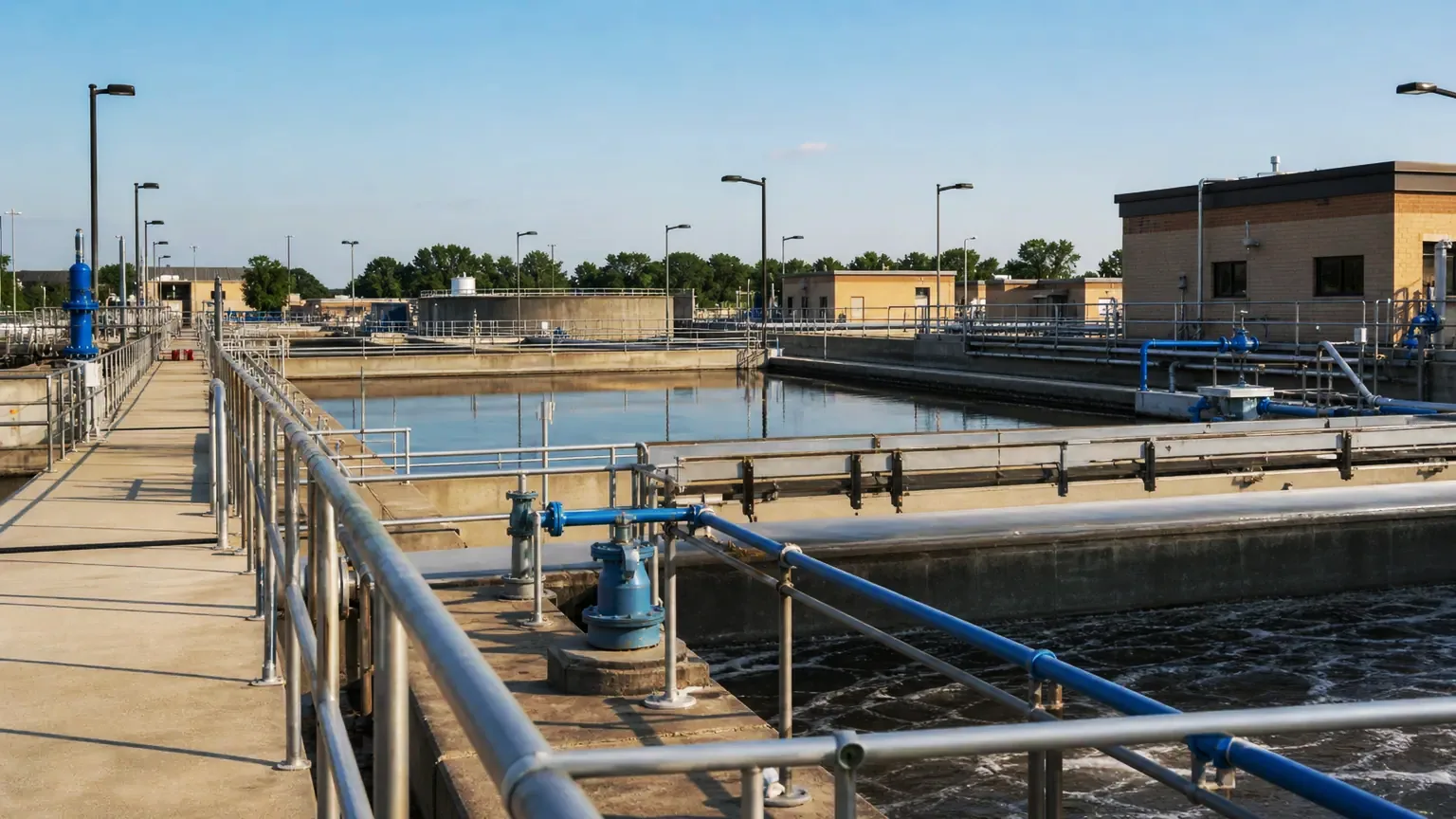
Fault Influent pump trip during wet-weather flow
AIMMS Evidence, parts, suppliers, approvals
Return Verified return and a complete record
Read-only SCADA and historian context · Customer-defined approvals · Direct process-control writes permanently out of scope
Why maintenance is getting harder here
Four pressures on this sector. They all arrive together when a pump goes down.
Each one is a published third-party figure about North American water and wastewater operations, carrying its source, its year and the population it was drawn from. None of them is an EQUA result and none of them is a claim about your utility. What each one does to a repair, and what AIMMS does about that, is stated beside it.
-
Critical assets are staying in service longer.
D+ the national grade for wastewater infrastructure, with drinking water at C-, both unchanged since the 2021 report card ASCE 2025 Report Card for America’s Infrastructure, opens in a new tabDuring the repairPumps, blowers, drives and valves stay in service past their design life, and the machine stops matching the catalogue. A rebuild from 2021 decides whether the seal kit on the shelf will seat, and nobody on shift knows which revision went in.
What AIMMS changesMatches the part to the configuration actually installed rather than to the catalogue, checks usable stock, and prepares the reservation or the sourcing route before an order goes out.
-
The people who know the plant best are leaving.
10,700 water and wastewater operator openings projected each year through 2034, essentially all of them replacing people who retire or leave, while the occupation itself is projected to shrink 7% US Bureau of Labor Statistics, Occupational Outlook Handbook, 2024 to 2034 projections, opens in a new tabDuring the repairThe fastest diagnostic tool on a plant is a mechanic who has met this failure before. That knowledge was never written down, so when they go the next technician starts the same fault from nothing at 3am.
What AIMMS changesPuts the manuals, the prior repairs and what the last crew learned beside the technician by voice, text, photo or video, then captures what failed, what fixed it and what they would do differently, and keeps it on the asset.
-
The utility has the data. The repair still waits on somebody to connect it.
19% say they leverage the data they collect effectively, against 70% who say they collect enough of it and 59% who have a digital strategy Black & Veatch 2026 Water Report, more than 600 US water sector stakeholders, FIG. 4, opens in a new tabDuring the repairThe alarm is in SCADA. The history is in the CMMS. The pump curve is a scanned PDF. The seal count is a spreadsheet last touched months ago. The person who fixed this exact fault retired in the spring.
What AIMMS changesBrings the permitted records into one working context where every line names the record it came from and how old it is, says what is missing or stale, then moves the digital work instead of sending the crew to find it.
-
There is less room for avoidable emergency spend.
43% of utilities say they are very to fully able to cover the costs of operations through rates and fees AWWA 2026 State of the Water Industry, 2,171 water professionals, opens in a new tabDuring the repairEmergency freight, a second mobilization for the wrong part, bypass pumping and contractor standby are the line items a rate case cannot absorb, and every one of them is bought by a delay rather than by a repair.
What AIMMS changesAssembles a comparable set of supplier responses and routes the release to the authorized owner with the evidence already attached, so the decision waits on a person rather than on a rebuilt case.
Together these describe a sector operating assets past their design life, losing the people who know them, holding operational data it cannot turn into action, and with little financial room for the emergency spend that delay creates. Black & Veatch reports separately that aging infrastructure again tops the list of challenges for this sector, and that more than half of respondents, 55%, now outsource engineering and technical staff.
Published third-party sector research does not establish AIMMS effectiveness. Only a baselined deployment on the customer's own workflow can do that.
Your own arithmetic
Price the hours your pumping assets spend waiting.
Two numbers you already know: how often a pumping or conveyance asset needs corrective work, and how long it sits between the alarm and an approved, executable repair path. The page does your arithmetic and nothing else.
Move both controls. Use your own wet-weather season, not ours.
These are your wet-weather numbers. No saving is credited to AIMMS anywhere on this page. Nothing you type here leaves your browser.
This section needs JavaScript to do your arithmetic. The figures beside it are the worked example for 38 corrective pump events a year at 14 waiting hours each. To use your own numbers, open the full value model.
532 hours a year
That is elapsed time before an approved repair path exists, not wrench time.
Crew standby, contractor waiting, emergency freight, bypass pumping, permit exposure. Enter what an hour is worth to you, or leave it empty.
Add a loaded hourly figure and this line becomes an annual number your finance team can argue with.
They arrive there as events a year, avoidable hours per event, and cost per hour, where your finance team can argue with each one separately.
Book Your 20-Minute Assessment What the utility gets
Protect treatment capacity, and prove it on your own assets.
Four operating outcomes the AIMMS workflow is built to produce around a wet-weather pump event. They are outcomes we design for and draw hatched.
Your KPI contract On a water or wastewater pilot, the numbers that decide anything are measured on your own influent, effluent, and lift-station assets. Six KPIs, agreed and baselined on your wet-weather workflow before the pilot starts, then reported against that baseline. See the KPI contract this pilot will measure.
Build the utility value model on your own operating numbers KPI contract
Measure the delay between the alarm and the executable repair.
Baseline the current wet-weather workflow before the pilot starts, measure the pilot against that baseline, and expand only when the evidence supports the decision. Every number here is measured on your pumps, not carried over from ours.
- Fault-to-ready-work time
- Elapsed time until the team has an approved, executable path.
- Downtime
- Unavailable or capacity-constrained asset hours during the selected workflow.
- Part certainty
- Correct part or approved alternate confirmed before dispatch or order.
- Supplier cycle
- Elapsed time from sourcing need to comparable response and selected path.
- Expert escalations
- Cases that require scarce senior expertise to reconstruct basic context.
- Closeout completeness
- Required evidence, readings, parts, approvals, and outcome captured.
Wet-weather inflow · Influent pump fault
The pump trips in seconds. Fragmented digital work can extend the response.
The operator sees the alarm. The technician still needs the exact pump history, current evidence, safe work path, correct seal or impeller, usable stock, supplier response, purchase approval, and a clean closeout.
Where elapsed time accumulates
- 01 Alarm acknowledged
- 02 Manuals and prior repair found
- 03 Cause and safe checks confirmed
- 04 Exact part and stock verified
- 05 Supplier and approval moved
- 06 Repair completed and documented
The physical repair should not wait on search, calls, re-entry, and approval chasing.
Wet well
Influent pump
Headworks screens
Aeration blowers
Final clarifier
Modelled clock from the trip to a clean compliance record
14 of 19.5 modelled hours go to search, callbacks, sourcing and approval chasing. The pump gallery sees four of them.
- 0.5 h Alarm acknowledged, crew mobilized Waiting on coordination
- 3 h Pump history, manuals and cause confirmed Waiting on coordination
- 3.5 h Exact seal or impeller and usable stock verified Waiting on coordination
- 5 h Supplier response and purchase approval Waiting on coordination
- 4 h Physical repair in the pump gallery Hands on the asset
- 1.5 h Testing, restart and return to service Verified and returned
- 2 h Closeout, readings and compliance record Waiting on coordination
Segment lengths follow the modelled premise stated further down this page. Hatched blocks are modelled waiting, the solid block is the physical repair, and the green block is the utility’s own verified return to service.
Stated-premise model
What that gap is worth in hours at a mid-size treatment plant.
A 60 MGD water resource recovery facility running 38 corrective events a year on pumping and conveyance, each holding 14 hours between the alarm and an approved, executable repair path.
- 38 corrective events a year
- One coherent asset family: influent, effluent and lift-station pumping. Not a whole-plant work order count.
- 14 h waiting per event
- From alarm acknowledged to a path with the cause confirmed, the part verified and the purchase approved. Excludes the physical repair, testing and restart.
- 0 h improvement assumed
- The model contains no assumed AIMMS effect at all. It sizes the delay and stops there.
532 modelled coordination hours a year
Roughly 22 elapsed days a year in which a pumping asset is waiting on a decision rather than on a technician.
38 events multiplied by 14 waiting hours is 532 hours. Every input above is an assumption we chose and stated, which is why the figure is drawn hatched. Change any one of them in the calculator at the top of this page and the answer changes with it.
Modelled from the stated premise and the assumptions shown. No AIMMS effect is applied.
Start where the consequence is real
Start with the assets that repeatedly threaten flow, treatment, or compliance.
Choose one operationally coherent workflow where the consequence and the avoidable delay are already visible.
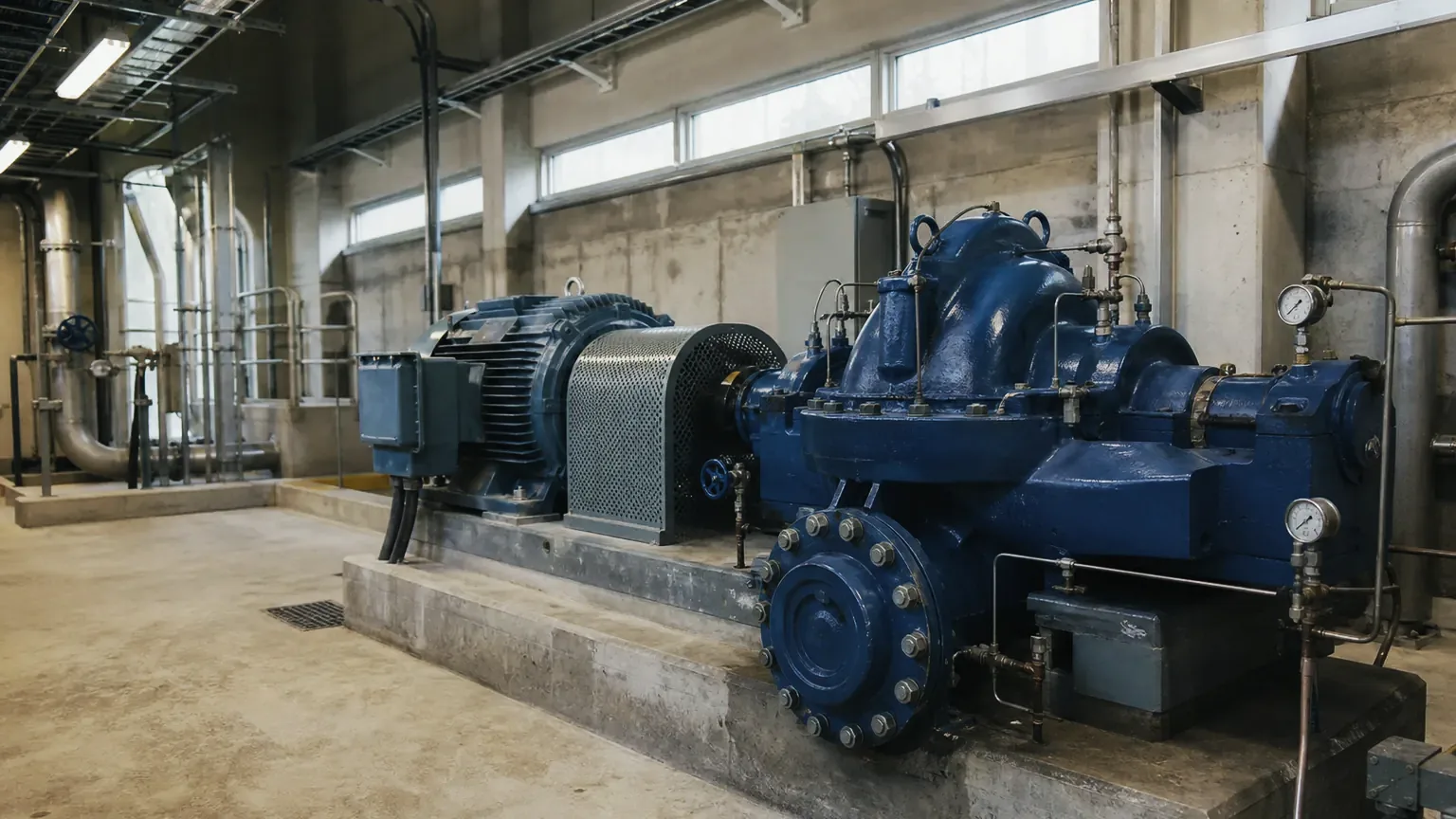
Pumping and conveyance
High-service, influent, effluent, and lift-station pumps, motors, VFDs, MCC support, valves, and actuators.
Treatment process support
Blowers, aeration equipment, screens, grit systems, chemical feed, membranes, UV, and disinfection support.
Solids and residuals
Sludge transfer, digesters, gas handling, dewatering equipment, compactors, and odor-control systems.
Electrical and resilience
Standby generators, ATS, drives, instrumentation, electrical-support assets, and critical spares.
The same everywhere
What does not change when the asset does.
The parts above are specific to water & wastewater. These are not: they are the same system, the same boundary and the same business case whichever operation you run.
- The operating contract The same seven questions answered at all six stages: what starts it, what AIMMS reads, what it does, who decides, what happens when something is missing, what is left behind, and what a pilot measures.
- One fault, followed end to end A single pump fault from the anomaly AIMMS detects in read-only telemetry, or the alarm that reaches it first, through to verified return with the record already complete.
- Security, control and authority Who can do what, what is read-only, what AIMMS does when a dependency fails, and why no setting exists that would let it write to a control system.
- The business case, on your numbers Five visible formulas, every input supplied by your finance team, and our measured production evidence kept on the other side of an explicit boundary.
Further reading
Written about water and wastewater.
Each of these answers one operating question in full, with its sources named in the text. They are the working detail behind the argument on this page.
- Guide The After-Hours RFQ Workbook: What to Send at 2 a.m. So the Quote Comes Back Usable Two tables to copy tonight. Fifteen fields that let a supplier answer once without a round trip, and a sheet that turns three quotes with different lead times, freight and return terms into one comparable column.
- Article What AWWA's 2026 Survey Actually Says About After-Hours Work AWWA's 2026 State of the Water Industry report added an overtime module. The finding that matters is not hours worked. It is that 32.7% of the utility respondents to that question report no formal overtime policies or procedures.
- Guide The Fault-to-Fix Trace: One Pump Failure, Every Digital Step, and the Three That Went Wrong One wastewater pump seal failure traced through fault, understand, prepare, repair, return and learn. Every digital step named, including the three where the first answer was wrong.
- Guide The Alarm Is Not the Repair: What Work and Asset Systems Do Next A neutral buyer guide to Cityworks, Maximo, Asset Essentials, Cartegraph, Lucity and the wider CMMS field for US water and wastewater utilities: who owns each product today, what each is authoritative over, what each does in the first hour after an alarm, and what none of them is built to do.
Water & Wastewater FAQ
Direct answers for plant operations, maintenance, finance, and IT.
The first conversation should resolve operating fit, the control boundary around SCADA, timing, and how the wet-weather workflow will be measured.
Does AIMMS replace our CMMS, EAM, ERP, SCADA, or historian?
No mandatory replacement is required. Those systems remain authoritative. AIMMS creates a controlled Data Twin for the selected workflow and coordinates the digital work around the repair. Pilot writeback stays inside AIMMS. External CMMS, EAM, or ERP writeback is customer-specific and requires customer approval and a validated integration.
What data is needed for a first water or wastewater pilot?
Start with the selected asset list, manuals, procedures, representative work history, parts and inventory data, supplier context, approval rules, and any permitted read-only SCADA or historian context. The exact set is tailored to the workflow.
How quickly can a first deployment start?
The working target is two weeks to configure the Data Twin and users, followed by a focused 30-day pilot across 10 to 20 selected assets. Data readiness, security review, workflow complexity, and customer requirements can change that timing.
Does AIMMS control pumps, valves, drives, or treatment processes?
No. Direct process-control writes are permanently outside AIMMS scope. AIMMS uses permitted read-only operational context. Qualified customer personnel retain plant operation, safety, field execution, and return-to-service authority.
Can our utility decide what AIMMS may do automatically?
Yes. The customer defines roles, permissions, spend limits, communication rules, action types, and approval gates. Permitted low-risk work can move inside policy while higher-impact actions route to the required person.
Where do the water sector figures on this page come from?
The benchmark band cites each third-party source and year inline. The stated-premise model prints every assumption beside the hatched figure. The measured deployment scope and limitations sit directly below the four EQUA metrics.
Bring us the pump, blower, drive, or treatment asset that keeps creating delay.
In 20 minutes, we will map the current fault-to-fix path, the work AIMMS can move, the customer control boundary, and a measurable first-deployment target.
One operating problem. One focused working session. No obligation.