
One Pump, Four Identifiers: Mapping the Alarm Tag to the Asset ID
A pump has a SCADA tag, a CMMS asset record, a GIS feature and a spares line, and nothing makes them agree. How to build the mapping, what the worksheet looks like, and what to do with the identifiers that will never reconcile.
Working on a live operating problem? Book Your 20-Minute Assessment
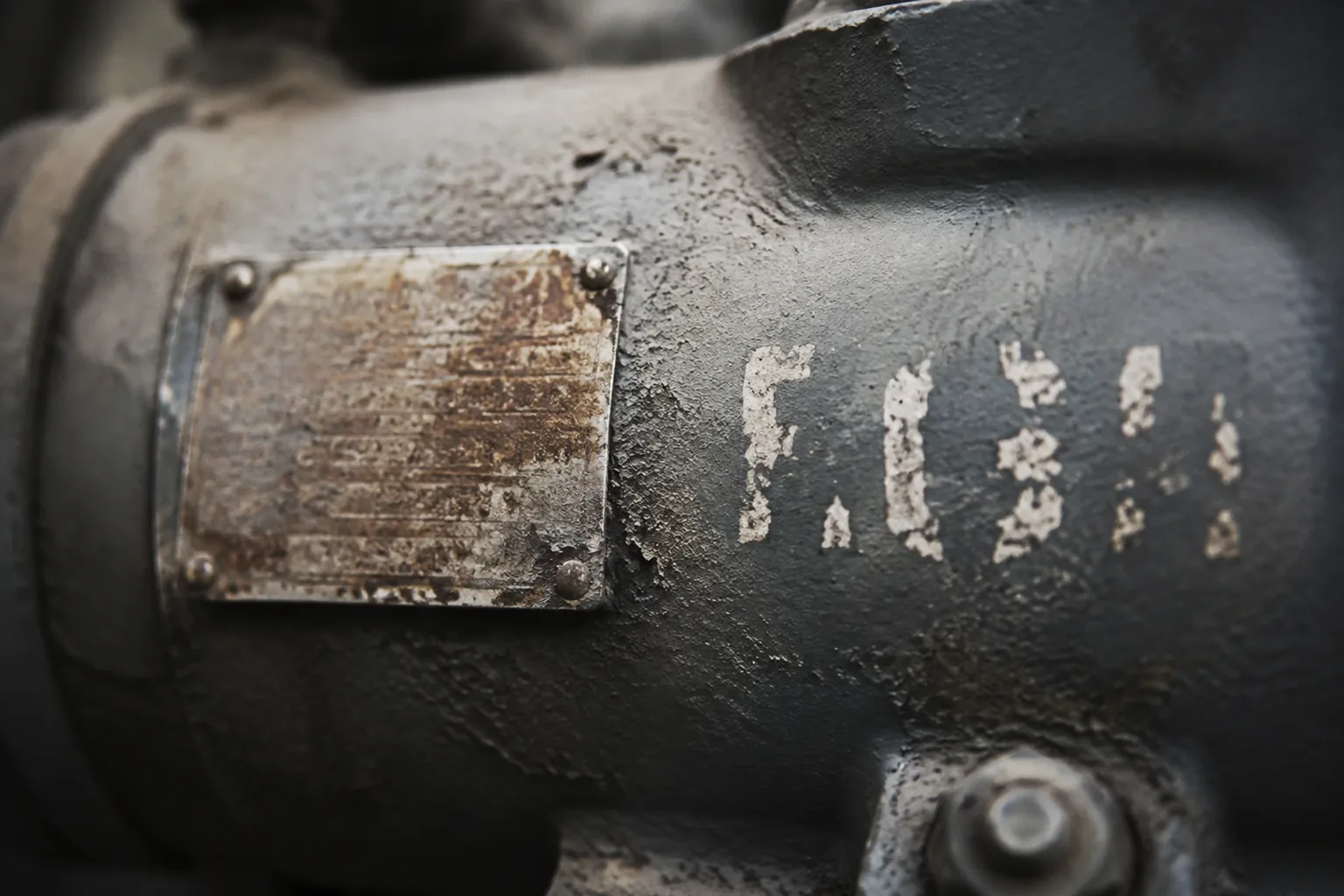
One pump carries at least four identifiers: the SCADA tag that fires, the asset record in the CMMS, the feature in the GIS, and the line item in the spares catalogue. Nothing enforces agreement between them. Reconciling them is the first real blocker in every maintenance system integration, and it comes before the connectors, before the pilot, before anything anyone demonstrated to you. United States Environmental Protection Agency asset management guidance names the level the mapping has to reach: the maintenance managed item.
Key takeaways
- A tag identifies a signal. An asset ID identifies a thing you can maintain. An alarm on a discharge pressure transmitter is an event about an instrument reading, and treating it as an event about the pump is an inference the mapping has to make explicitly.
- The identifiers diverge for reasons nobody can undo. Different systems, different owners, different decades, contractor-supplied tag schemes at each plant expansion, and rebuilds that changed the machine without changing the tag.
- The join key is the deliverable. Each pairing needs a key, a stated confidence, and a named owner who can settle a disagreement.
- The unmappable cases are the real work. Tags with no asset, assets with no tag, one tag over two assets, two tags over one asset, decommissioned equipment still emitting, and spares whose identity follows the installed rebuild rather than the nameplate. Each needs a disposition, not a resolution.
- A widely borrowed equipment-taxonomy standard exists, and it is not the water sector’s native taxonomy. ISO 14224:2016 is scoped to petroleum, petrochemical and natural gas industries. Build the hierarchy from EPA asset management guidance and your own functional locations instead.
- Map by criticality, never alphabetically. EPA inventory guidance says to take critical assets first and let crews build the record as they respond to work orders. Partial coverage of the assets that hurt beats complete coverage of the assets that do not.
- This is an asset management problem before it is a software problem. No integration can substitute for a utility deciding what its assets are called.
Why does one pump have four identities?
Because four different groups named it, at four different times, for four different purposes, and none of them were wrong.
The SCADA tag came from the systems integrator who commissioned the control panel. Its job was to make the HMI readable and the alarm list navigable for an operator at 3 a.m., and its convention came from that integrator’s house style or from the specification the consulting engineer wrote for that contract. When the plant expanded, a different integrator wrote a different scheme. The two now sit in one historian.
The CMMS asset record came from maintenance, or from the consultant who loaded the initial register during an asset management programme. It has to carry a work order, a PM schedule, a labour charge and a cost history, so it is organised around what gets maintained and who maintains it.
The GIS feature came from engineering or the GIS group, usually for the buried network first and the plant later. At many water utilities the GIS is the asset register for anything linear, and the treatment plant appears in it as a single facility polygon with nothing inside. Its job is spatial.
The spares line came from stores or purchasing. It exists to make a part orderable, so it is organised around vendors, part numbers and units of issue rather than around the machine the part goes into.
Two further forces widen the gap. Tags are frequently named for the signal rather than the asset, because that is what an instrument tag is for. And rebuilds change configuration without changing identity. A pump that has been through two rebuilds can have a different impeller trim, seal arrangement and motor frame while keeping the same tag, asset number and GIS point, because renaming it would break every historical record hanging off it. That is usually the right call. It also means the identifier no longer describes the machine.
EPA’s fact sheet on asset management for sewer collection systems states what the numbering is for. Asset identification is the process of identifying and numbering the primary components in the system, and once those components are assigned unique identifiers the utility can link its information systems and aggregate data for financial, economic, technical and management use. Linking is the point of an identifier. Four uncoordinated numbering schemes are exactly what prevents it.
What is the difference between a signal tag and an asset identifier?
An instrument tag identifies a measurement point and the loop it belongs to. ANSI/ISA-5.1 governs instrumentation symbols and identification, and an article published by ISA in its own magazine InTech describes the standard’s purpose as consistently identifying instrumentation in project documents used for specifying, purchasing, tracking, installing and maintaining instruments. That is a real and useful job. It is not the job of naming a utility’s rotating equipment register, and ISA-5.1 should not be pressed into that service.
The consequence shows up the first time an alarm is routed as though it were a fault. A high discharge pressure alarm on PIT-1142 is a statement about a transmitter reading. It is consistent with a closed or throttled discharge valve, a downstream blockage, a wrong setpoint, a drifting or failed transmitter, an impulse line problem, or an actual pump condition. Only one of those is a pump fault, and one of them is a fault on the instrument itself. If the mapping says “PIT-1142 belongs to Pump 2” and stops there, every one of those causes raises a work order against the pump, and the pump’s failure history stops being a record of what broke.
So the mapping needs two relationships, not one:
- What does this tag measure? The physical measurement point, its instrument, and the range and units.
- Which maintainable item is that measurement about? The asset the signal characterises, which may be the pump, the discharge piping, the valve, or the transmitter itself.
Keeping those separate is what lets a utility say, a year later, that three of last year’s twelve alarms on that loop were instrument faults.
One pump, four identities, four owners
Scroll sideways to see the whole drawing.
Figure 1. One pump, four identities, four owners. One machine at the centre, described as a single influent pump, surrounded by four separate identities held in four different systems. The control system holds a signal tag naming the measurement rather than the machine. The maintenance system holds an asset record at whatever level work orders are raised. The geographic system holds a feature with its own identifier and a location. The spares catalogue holds a line item tied to the nameplate model rather than the installed rebuild. Beneath them, a single outcome states that nothing in any of these systems guarantees the four agree, and that reconciling them is the utility's work product.
What does the mapping worksheet look like?
The worksheet below is a pre-authored scenario. The utility does not exist, and the tags, asset numbers, GIS identifiers and part numbers are synthetic. It shows the shape of the columns and the exception types the rest of this guide works through, and it describes no customer.
Seven columns do the work: the source system, the identifier as it actually appears, what it identifies, who owns it, the key you can join on, your confidence, and the exception note that stops the next person repeating your analysis.
| Source system | Identifier | What it identifies | Owner | Join key | Confidence | Exception note |
|---|---|---|---|---|---|---|
| SCADA / HMI | HW_INFPMP2_RUN | Run feedback contact on influent pump 2 | Instrumentation and controls | WWTP-HW-PMP-02 | High | Direct one to one; tag renamed in 2014 panel upgrade, old tag still in historian |
| Historian | PLANT.HW.PMP2.RUN | Same contact, archived point | Instrumentation and controls | WWTP-HW-PMP-02 | High | Point name changed on historian migration; pre-2019 trend sits under the old name |
| SCADA / HMI | PIT-1142 | Discharge pressure at the headworks influent header | Instrumentation and controls | WWTP-HW-HDR-01 | High for header, low for pump | Header level, not pump level. Two pumps discharge into it |
| CMMS | WWTP-HW-PMP-02 | Maintainable pump unit, headworks influent 2 | Maintenance | Primary key | High | Record covers pump and motor as one item; motor has no separate asset number |
| GIS | FAC-0417 | Treatment plant facility polygon | GIS and engineering | Facility only | Not applicable | No in-plant features. GIS resolves to the site, not to the pump |
| Spares catalogue | SP-4471 | Mechanical seal, cartridge type | Stores and purchasing | WWTP-HW-PMP-02 | Medium | Correct for the current rebuild only. Superseded seal from the original build is still stocked |
| SCADA / HMI | LS14_HI_LVL | High wet well level at Cedar Ridge lift station | Collections and controls | LS-014 (station) | High for station, none for pump | Station level alarm. Fires for a pump fault, a power loss, a blocked inlet or a storm inflow |
| CMMS | LS-014-PMP-A | Maintainable submersible pump, position A | Collections maintenance | Primary key | High | Position A and B swap on rebuild. Serial number, not position, follows the machine |
| CMMS | LS-014-PMP-B | Maintainable submersible pump, position B | Collections maintenance | Primary key | High | See above |
| GIS | SSPS-0014 | Sanitary sewer pump station point feature | GIS and engineering | LS-014 | High for station | Station is one point. No child features for the two pumps |
| SCADA / HMI | AB_BLW3_DE_TMP | Drive end bearing temperature, aeration blower 3 | Instrumentation and controls | WWTP-AER-BLW-03 | High | Signal is about the bearing, which has no asset record of its own |
| CMMS | WWTP-AER-BLW-03 | Maintainable blower unit, aeration basin 3 | Maintenance | Primary key | High | Asset was rebuilt in 2021 to a different bearing arrangement than the nameplate |
| Nameplate | Serial 8841-3372-B | The physical machine | Maintenance and stores | None recorded | Low | Serial not carried in the CMMS record. Only source of truth after a swap |
| Spares catalogue | SP-9903 | Drive end bearing | Stores and purchasing | WWTP-AER-BLW-03 | Low | Catalogue holds the nameplate bearing. Installed bearing differs after the 2021 rebuild |
Three rows are worth reading twice.
PIT-1142 does not belong to a pump. It belongs to a header that two pumps discharge into, so any inference from that tag to a specific pump is a guess until run feedback narrows it.
LS14_HI_LVL is a station level alarm with at least four unrelated causes, and only one of them is a maintenance event. Wire that tag straight to work order creation and you will dispatch a crew for a rainstorm.
And the blower’s bearing part number is wrong in the catalogue in a way nothing in the digital record will reveal, because the truth is stamped on the machine and written on a rebuild report in a filing cabinet. Someone orders the nameplate bearing, it arrives, it does not fit, and the blower waits another week.
Which taxonomy should the hierarchy come from?
A published equipment-taxonomy standard exists and is very widely borrowed. ISO 14224:2016 is titled “Petroleum, petrochemical and natural gas industries. Collection and exchange of reliability and maintenance data for equipment”, and its scope is that industry. It is not the water sector’s native taxonomy, and a utility that adopts it wholesale inherits an equipment population and a set of failure modes drawn from somewhere else. It is also a paid document, so this piece names it and stops. The same caution applies to ISO 24516-4:2019, which does address wastewater treatment plants, sludge facilities and pumping stations directly, and which is also paid.
For a hierarchy you can publish, build from EPA guidance and your own functional locations:
| Level | What sits here | Source of the idea |
|---|---|---|
| System | Drinking water, wastewater collection, treatment | Local. Your own service systems |
| Facility | Treatment plant, lift station, well, tank site | EPA System Inventory Worksheet, location as an identifier |
| Process area | Headworks, primary, aeration, disinfection, solids | Plant process convention, local |
| Asset | The maintainable unit that carries a work order | EPA, Asset Management 101, asset versus component |
| Maintenance managed item | The smallest subdivision at which repair, refurbish or replace is decided | EPA, Asset Management 101 |
EPA’s Asset Management 101 material states the test plainly. The maintenance managed item is the item at the lowest level, the smallest subdivision, of an asset inventory composed as a nested hierarchy, and it is typically the level at which an asset is maintained or at which decisions are made to repair, refurbish or replace. Its instruction to a utility deciding how far down to go is “think work order”.
That test settles most mapping arguments. If you would not raise a work order against it, it does not need its own asset ID. It needs to be an attribute of the thing you would.
What do you do with the cases that will not map?
This is where the exercise survives contact with the register or does not. None of the cases below resolves cleanly, and each needs a written disposition so the next person does not start over.
| Case | What it looks like | Disposition |
|---|---|---|
| Tag maps to nothing | An alarm point in the historian with no corresponding asset record, often on removed equipment, a spare panel input, or a signal from a package skid the utility never itemised | Leave it unmapped and mark it unmapped. Do not force it onto the nearest asset. Route its alarms to a review queue rather than to work order creation |
| Asset has no tag | A maintained item with no instrumentation at all: a manual valve, a screen, a bar rack, a gearbox | Record it as intentionally untagged. Its condition record comes from inspection rounds and work orders, not from the historian. Do not treat the absence as a data gap to be closed with sensors by default |
| One tag covers two assets | A header pressure transmitter downstream of two pumps, a station level float, a common discharge flow meter | Map the tag to the parent, not to a child. Add a note describing which children could plausibly cause the alarm, and require a second signal, typically run feedback, before attributing anything to one of them |
| Two tags cover one asset | A duplicate point created during a historian migration, a local panel tag and a supervisory tag, or a legacy tag kept alive for trend continuity | Nominate one as primary and mark the other as an alias with its valid date range. Never delete the old point if history hangs on it |
| Decommissioned asset still emitting | An abandoned pump whose input is still scanned, holding at a fixed value or fluttering on a floating input | Mark the asset retired in the CMMS with a retirement date, and mark the tag as retired from that date forward. Keep the historical data. Suppress the point from anything that generates work |
| Spare identity depends on the rebuild | The catalogue holds the nameplate part. The installed part came from a rebuild that used a different seal, bearing or impeller | Treat the nameplate model as a starting point, not a fact. Carry the installed configuration on the asset record with the rebuild date and the shop that did the work. Verify before ordering |
| Same asset, different identifier per system, both in current use | Collections calls it LS-14, GIS calls it SSPS-0014, finance calls it by a capital project number | Pick one system as the anchor and record a crosswalk. Do not renumber. Renumbering breaks history in the system you did not think about |
The pattern across all seven is the same. The disposition is a decision recorded with an owner and a date, not a repair to the data. Some of these will still be open in five years, and the register should say so.
How do you do this without stopping to do all of it?
Take critical assets first. EPA’s guidance on generating an asset inventory says exactly this: work retrospectively, take critical assets first, and let existing crews build the record as they respond to work orders. Working alphabetically or by tag order guarantees the first month is spent on assets nobody was worried about.
If your utility has no formal criticality model, EPA’s small systems handbook describes a priority ranking matrix a group of operators and staff can complete together, comparing assets pair by pair and voting, with consequence of failure settled by discussion rather than by a score. Its worked example runs twenty operators and staff at three votes each. It is coarse. It is also enough to order the first pass.
On scale, resist any benchmark you cannot verify. The useful measurement takes an afternoon: count the tags in your historian, the asset records in your CMMS, and the features in the plant portion of your GIS. Those three numbers will not be close, and the distance between them is the size of the problem in your plant, in your numbers. The subset that needs a confident mapping is far smaller than any of the three, because it is the subset that generates work.
Set two constraints before the first row is filled in. Accept partial coverage as the finished state of phase one, and write down what is out of scope so the gap is a decision rather than an oversight. Then give every row an owner. A mapping with no owner degrades from the day the consultant leaves.
This is not a niche complaint. Black and Veatch’s 2026 Water Report, drawing on more than 600 United States water industry stakeholders, found that 70 percent say they collect sufficient data while only 19 percent say they use it effectively. Data that cannot be joined to the thing it describes is data you cannot act on. AWWA’s 2026 State of the Water Industry executive summary ranks implementing proactive asset management fourth on its chart of utility priorities rated high to immediate, four places above implementing data management and digitisation. That is the right order. The asset register has to exist before the analytics on top of it mean anything.
Where automated detection sits in this
Any system that reads SCADA, historian and sensor data and concludes something about an asset is making the tag to asset inference described above, whether or not it says so. Ask any such product five questions: which tags did you map, to which assets, at what confidence, who reviewed it, and what happens to the tags you could not map. A product that cannot answer those has made the mapping anyway and has not shown you its work.
Reading process and event data is a different discipline from condition monitoring. Vibration analysis, infrared thermography, oil and wear debris analysis and motor current signature analysis have their own instrumentation, sampling regimes and certified specialists, and they stay on your programme whatever else you connect.
Who wrote this
EQUA AI builds EQUA AIMMS, and it lives or dies on the mapping this article describes.
It resolves the alarm to the asset, carries that identity through evidence, parts, quotes and approvals, and writes back against the right node of your hierarchy rather than a plausible-looking one. The register stays yours and the mapping stays your work product. What changes is that it stops being re-derived by hand, from memory, every time a tag fires at 2am.
Sources
- United States Environmental Protection Agency, Office of Water, Asset Management: A Handbook for Small Water Systems, EPA-816-R-21-006, April 2022. Source for the System Inventory Worksheet instruction to identify assets “as specific as possible by providing location, manufacturer, or some other identifier”, and for the priority ranking matrix in which participants vote on the assets deemed most critical.
- United States Environmental Protection Agency, Office of Ground Water and Drinking Water, Asset Management 101: Basics for Small Water and Wastewater Systems. Source for the five core questions framework, for the retrospective and prospective approaches to generating an asset inventory including “critical first” and building the record as crews respond to work orders, and for the maintenance managed item as the lowest level of a nested asset inventory, tested by asking at what level a work order is raised.
- United States Environmental Protection Agency, Asset Management: A Best Practices Guide, EPA 816-F-08-014. Source for the five core questions framework as the recommended starting point for a water system of any size: “A good starting point for any size water system is the five core questions framework for asset management.”
- United States Environmental Protection Agency, Office of Wastewater Management, Fact Sheet: Asset Management for Sewer Collection Systems, 833-F-02-001, April 2002. Source for asset identification and valuation being listed among the key elements of asset management, and for asset identification as the process of identifying and numbering the primary components, after which the utility can link information systems and aggregate data for financial, economic, technical and management use.
- International Organization for Standardization, ISO 14224:2016, Petroleum, petrochemical and natural gas industries. Collection and exchange of reliability and maintenance data for equipment. Cited by number, title and scope only. The standard is a paid document and its contents are not reproduced, quoted or paraphrased here.
- International Organization for Standardization, ISO 24516-4:2019, Guidelines for the management of assets of water supply and wastewater systems. Part 4: Wastewater treatment plants, sludge treatment facilities, pumping stations, retention and detention facilities. Cited by number, title and scope only. Also a paid document.
- Tom McAvinew, ISA-5.1, Instrumentation Symbols and Identification, InTech, International Society of Automation, September and October 2020 75th anniversary edition. Source for the statement that the purpose of ISA-5.1 is to consistently identify instrumentation in project documents used for specifying, purchasing, tracking, installing and maintaining instruments.
- Black and Veatch, Evolving water challenges drive innovation: 15th annual Black and Veatch 2026 Water Report highlights path forward, press release for the 2026 Water Report, 9 June 2026, drawing on more than 600 United States water industry stakeholders. Figures cited, verbatim from the release: “Seven in 10 (70%) say they collect sufficient data, but only 19% say they leverage it effectively.”
- American Water Works Association, 2026 State of the Water Industry, Executive Summary, survey fielded 21 September to 31 October 2025, published 30 April 2026, total n=2,171. Source for the ordering of the “Utility Priorities Ranked High to Immediate” chart, which reads, in order, ensure cybersecurity and privacy, protect drinking water supplies, increase system resilience, implement proactive asset management, address customer service expectations, meet new treatment requirements, reduce operating costs, then implement data management and digitization. Also the source for the field dates and the count of 2,171 participating water professionals.