
EQUA AI at Black & Veatch IgniteX 2026: What We Learned at the Kickoff
Two days at Black & Veatch's world headquarters changed our sense of scale. Notes on what we learned about critical infrastructure, what stood out about the people who build it, and why wastewater is where we are starting.
Working on a live operating problem? Book Your 20-Minute Assessment
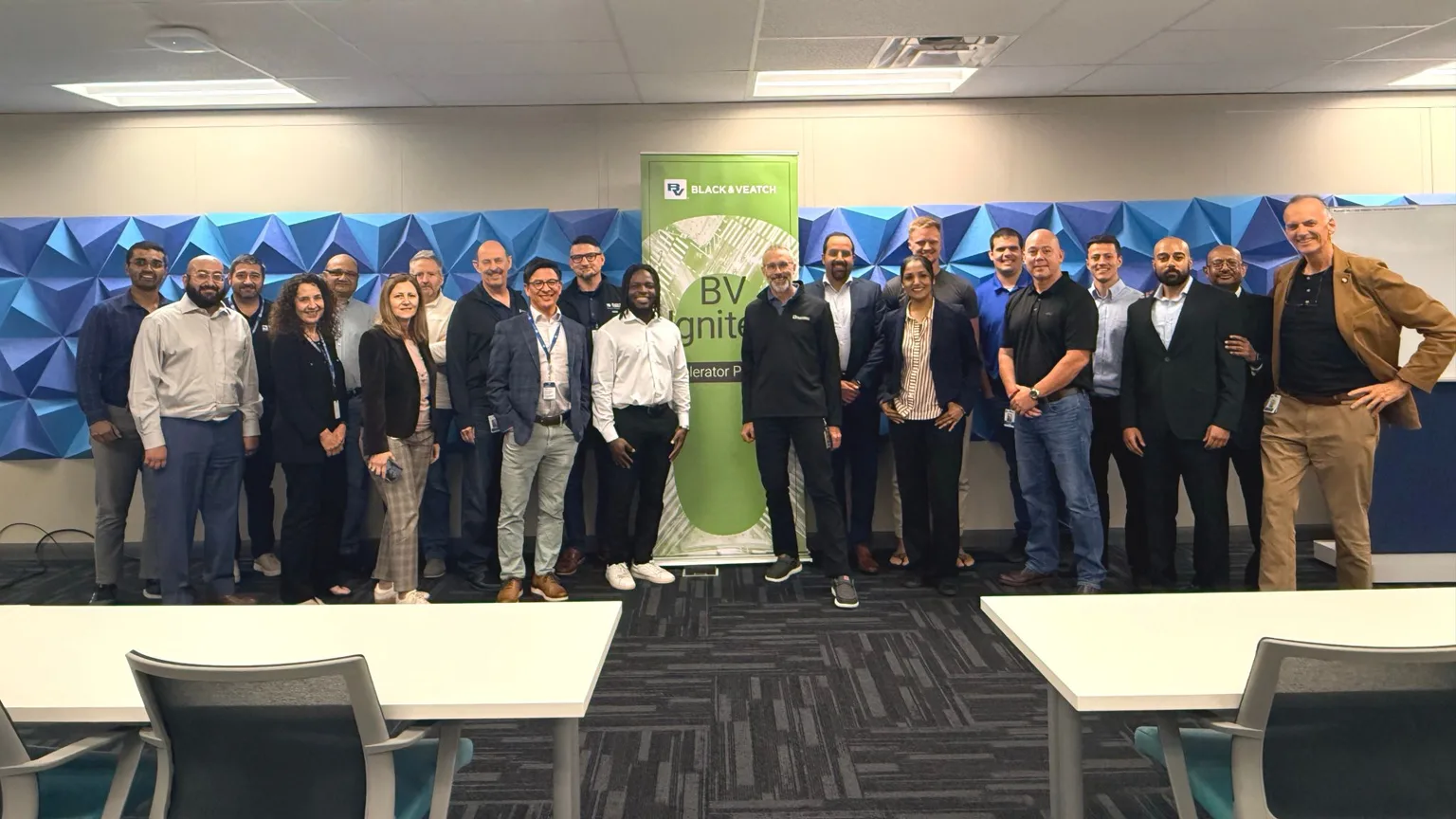
Spending two days with Black & Veatch changes your sense of scale.
A maintenance problem at a factory can stop production. A maintenance problem in critical infrastructure can affect drinking water, power, communications, or a service that a whole community depends on and never thinks about until it stops.
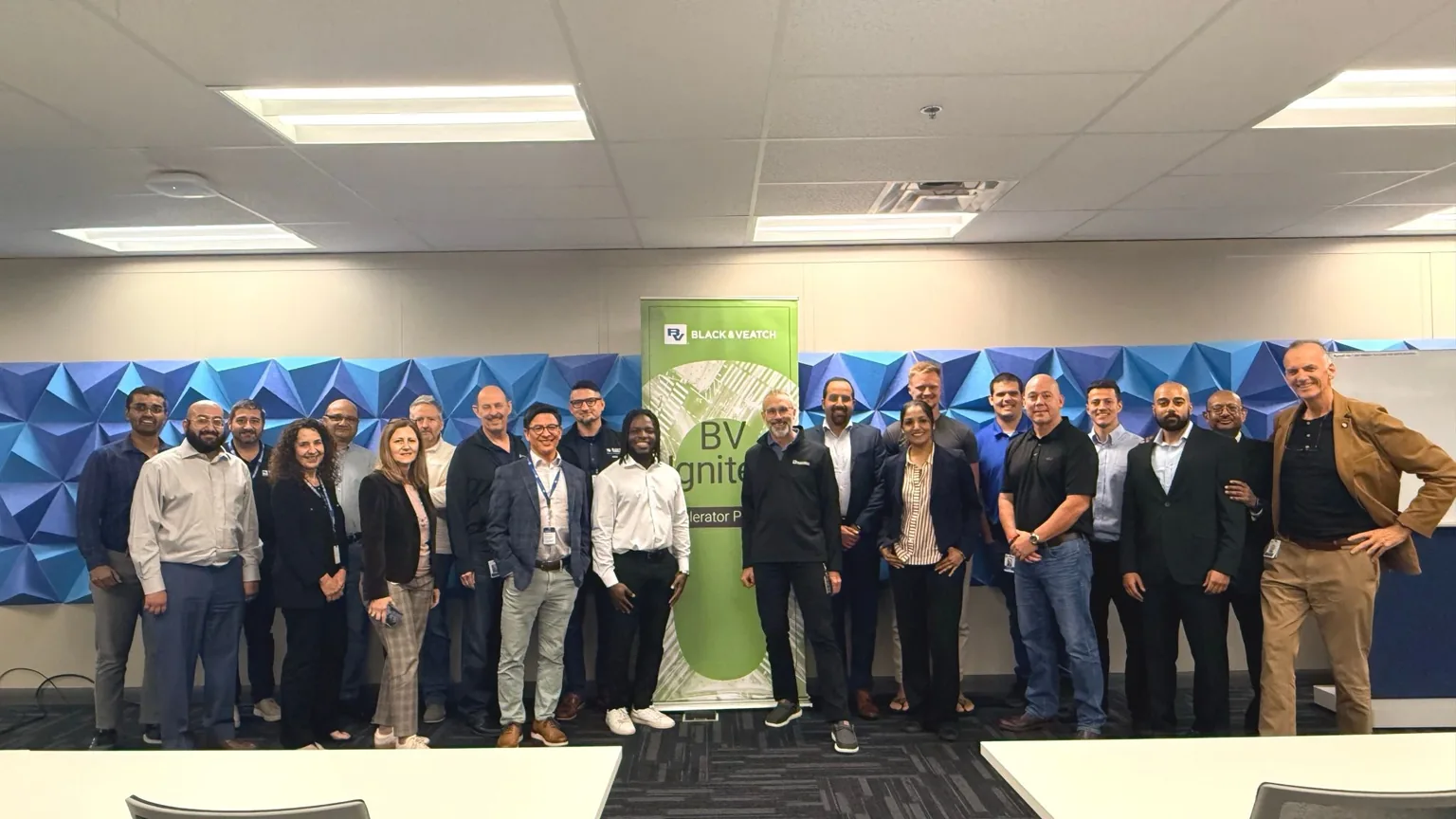
That was the clearest thing we took away from the Black & Veatch IgniteX 2026 kickoff on 29 and 30 July, at Black & Veatch’s world headquarters in Overland Park, Kansas.
EQUA’s Srikant, Lokesh and Sanjeev spent the two days with Black & Veatch leaders, technical experts, and the other companies selected for this year’s programme. More than 100 companies applied to the 2026 cohort and five were selected. Srikant also joined the cohort-company panel.
The programme
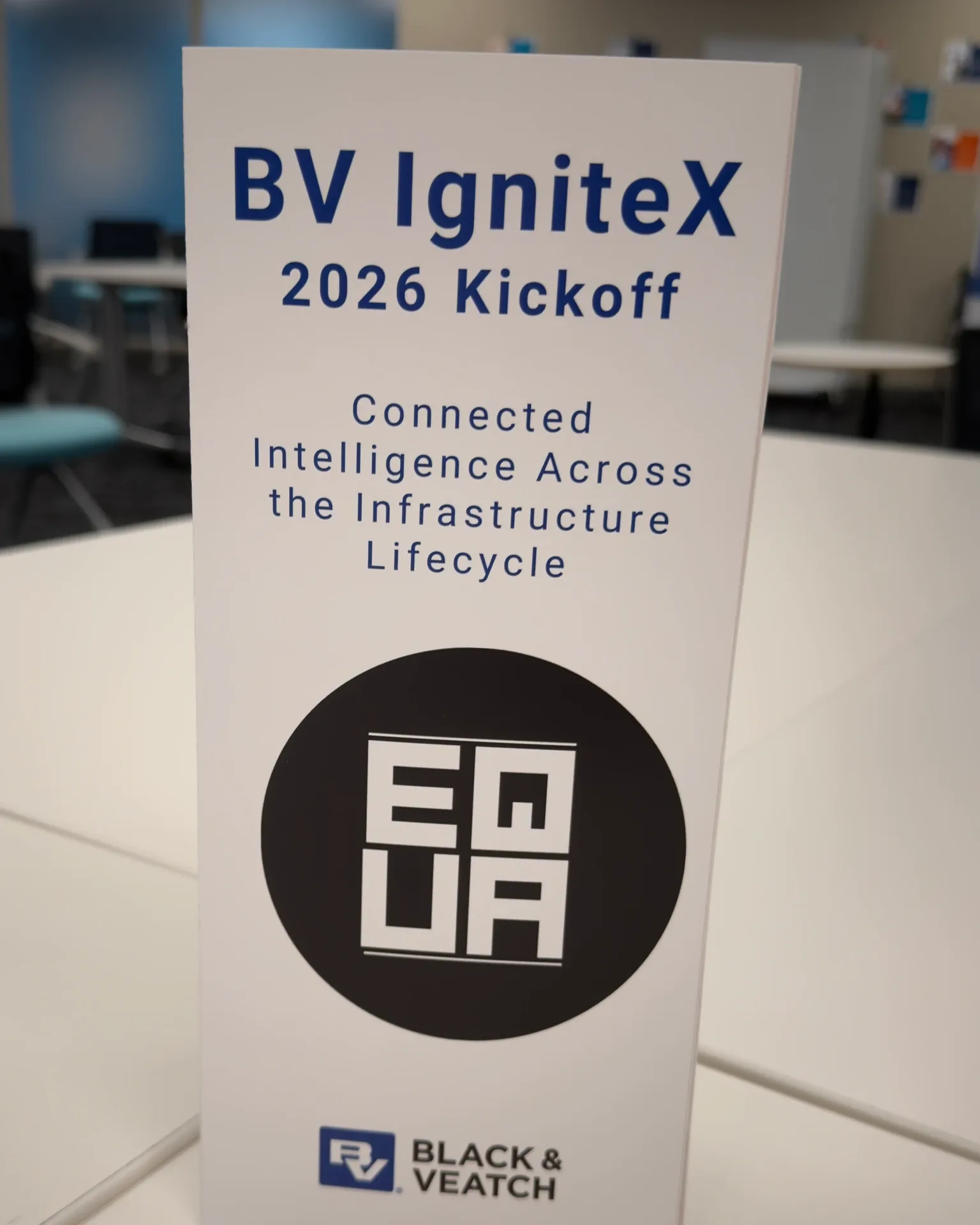
BV IgniteX is Black & Veatch’s accelerator. The 2026 edition runs 16 weeks around the theme Connected Intelligence Across the Infrastructure Lifecycle, with a stated focus on AI-enabled project delivery, smarter infrastructure, improved asset management, and empowering the workforce.
Two of those four are the problem EQUA exists for, which is why the fit was worth pursuing.
Scale changes the standard
The most useful thing about the two days was not a session. It was the accumulated effect of listening to people describe the work they do.
Black & Veatch designs and builds the physical systems that carry water, power and connectivity, at a scale where a decision is not reversible in a sprint. When you spend two days inside that, a specific realisation arrives about software.
When the asset supports critical infrastructure, the standard for software changes.
Reliability stops being a service-level objective and becomes a condition of use. Security stops being a procurement checkbox and becomes an architectural constraint. Operator trust stops being an adoption metric and becomes the thing that determines whether the tool is used at 2 a.m. by somebody who has been awake for nineteen hours. Existing systems stop being legacy and become the systems of record that a regulator will audit. Safety stops being a policy and becomes the reason a step exists. Change management stops being a rollout plan and becomes a question about who is accountable when something is different.
That is why AIMMS cannot be, and is not, an AI that gives good answers. Good answers are the easy part. The hard part is a system that is honest about what it does not know, that stops when a source is unreachable rather than filling the gap with something plausible, that never holds authority it does not need, and that leaves every physical decision with the qualified person who is accountable for it.
We knew that before the kickoff. We knew it differently afterwards.
Low ego, high learning
The thing that genuinely surprised us was cultural.
Black & Veatch has more than a century of infrastructure experience. Very little of that experience translated into institutional ego in the room. People were curious. They asked specific questions, several of which we did not have good answers to. They challenged ideas without trying to win the exchange. They were openly interested in how small companies work and what a different approach might teach them.
The organisation also felt considerably smaller than its scale. People knew each other. They supported each other in front of visitors. They seemed comfortable learning across roles and seniority, which is rarer in large engineering organisations than anybody admits.
That combination, deep expertise held without defensiveness, is the environment you want when the thing you are building has to survive contact with people who know more about the asset than you ever will.
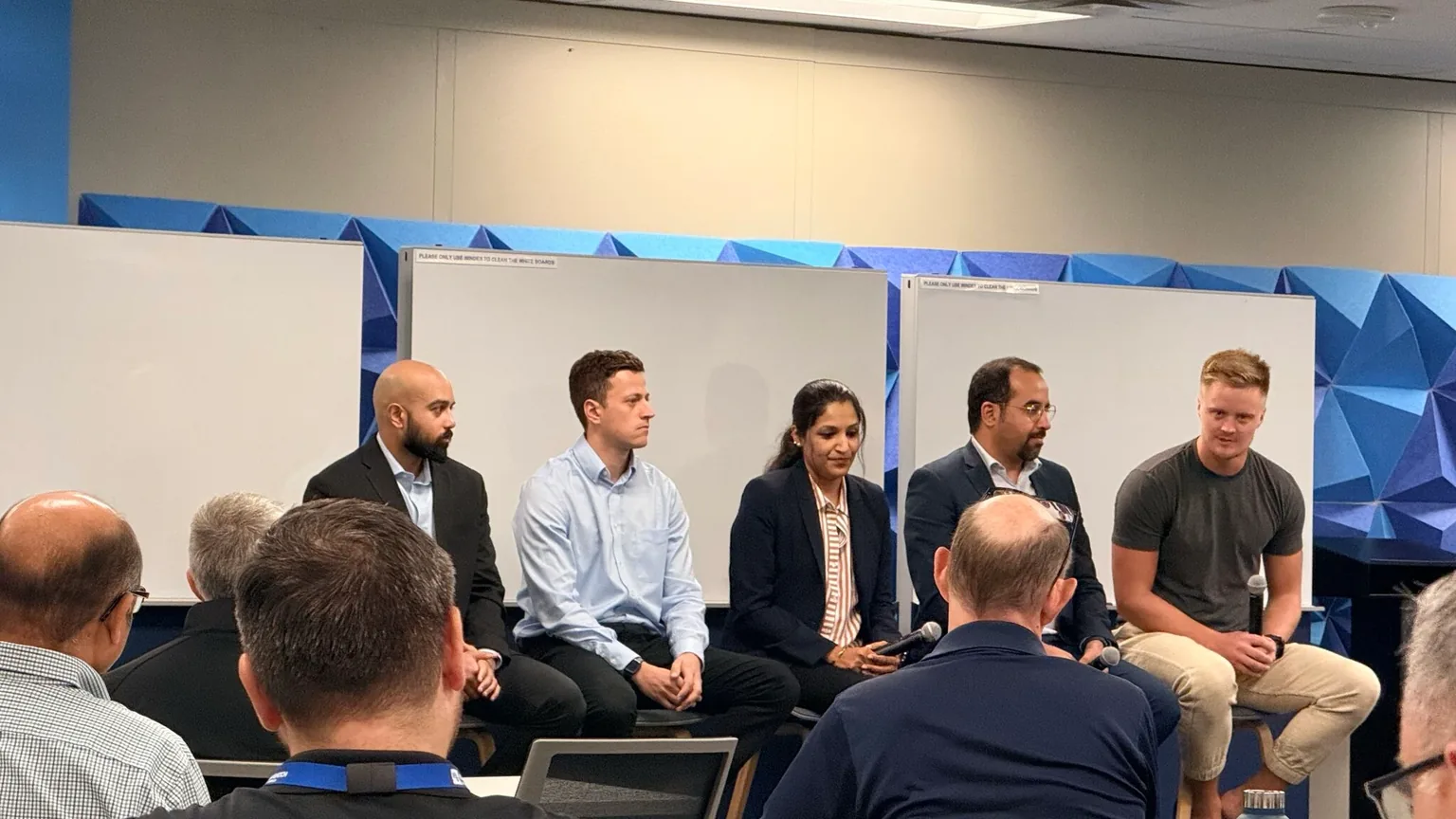
The panel
Srikant joined the IgniteX Cohort Company Panel: Leading an Innovative Company, alongside the other cohort founders, taking questions from Black & Veatch staff.
The part of that conversation worth repeating here is the part about where a company’s attention goes. It is straightforward to build technology and then look for a problem that fits it. It is slower, and better, to find an operational problem that people already work around every day, understand it properly, and then build only what that problem requires.
For us that problem is not “maintenance”. It is the specific interval between a fault being detected and a repair being able to start, which is where a surprising amount of availability is lost and which almost nobody instruments.
Why wastewater first
The natural question at an accelerator focused on the whole infrastructure lifecycle is why a company would deliberately narrow to one sector.
The answer is in the operating data. Black & Veatch’s own 2026 Water Report, drawn from a survey of more than 600 United States water sector stakeholders, found that 70 percent of respondents collect enough data and only 19 percent leverage it effectively. Asked to rate the asset information held in their maintenance and asset-management systems, only 7 percent called it very good. More than half, 55 percent, now outsource engineering and technical staff.
Read those three together and the shape of the problem is specific rather than general. Wastewater plants are not short of alarms, SCADA, maintenance software, manuals, parts records or experienced technicians. What they are short of is the connective step between all of that and a repair that can actually start.
That is the problem we are working on. AIMMS is built to help a team understand the fault, guide the repair, and move the permitted digital work around it, in parts, sourcing, approvals and records, so the asset gets back into service sooner.
What stood out was the combination of scale and humility. Black & Veatch works on infrastructure that people depend on every day, and the team came into the room curious, open, and willing to be taught something. That is exactly the environment we want to build AIMMS in: real problems, experienced operators, and a clear standard for what counts as measurable value.
Srikant, CEO, EQUA AI
What comes next
The rest of IgniteX is where the assumptions get tested against real infrastructure needs, with Black & Veatch professionals and their utility clients, on real scenarios rather than on our own examples. The programme concludes at Black & Veatch’s headquarters in October.
For EQUA, success is not completing an accelerator. It is proving that AIMMS helps the people responsible for critical assets spend less time chasing information and digital work, and more time getting equipment safely back into service.
If that is the problem you are living with, the fastest way to find out whether it applies to your plant is to bring us one recurring failure.
Sources
- Black & Veatch, BV IgniteX programme, 2026 cohort, theme Connected Intelligence Across the Infrastructure Lifecycle, 16-week programme, five companies selected from more than 100 applicants.
- Black & Veatch, 2026 Water Report, 15th annual edition, survey of more than 600 United States water sector stakeholders, June 2026.
Photographs taken at the Black & Veatch IgniteX 2026 kickoff, Overland Park, Kansas, 29 and 30 July 2026. Black & Veatch and BV IgniteX are trademarks of Black & Veatch Holding Company, used here to describe EQUA AI’s participation in the programme.